Can Ti-6Al-4V be additively manufactured?
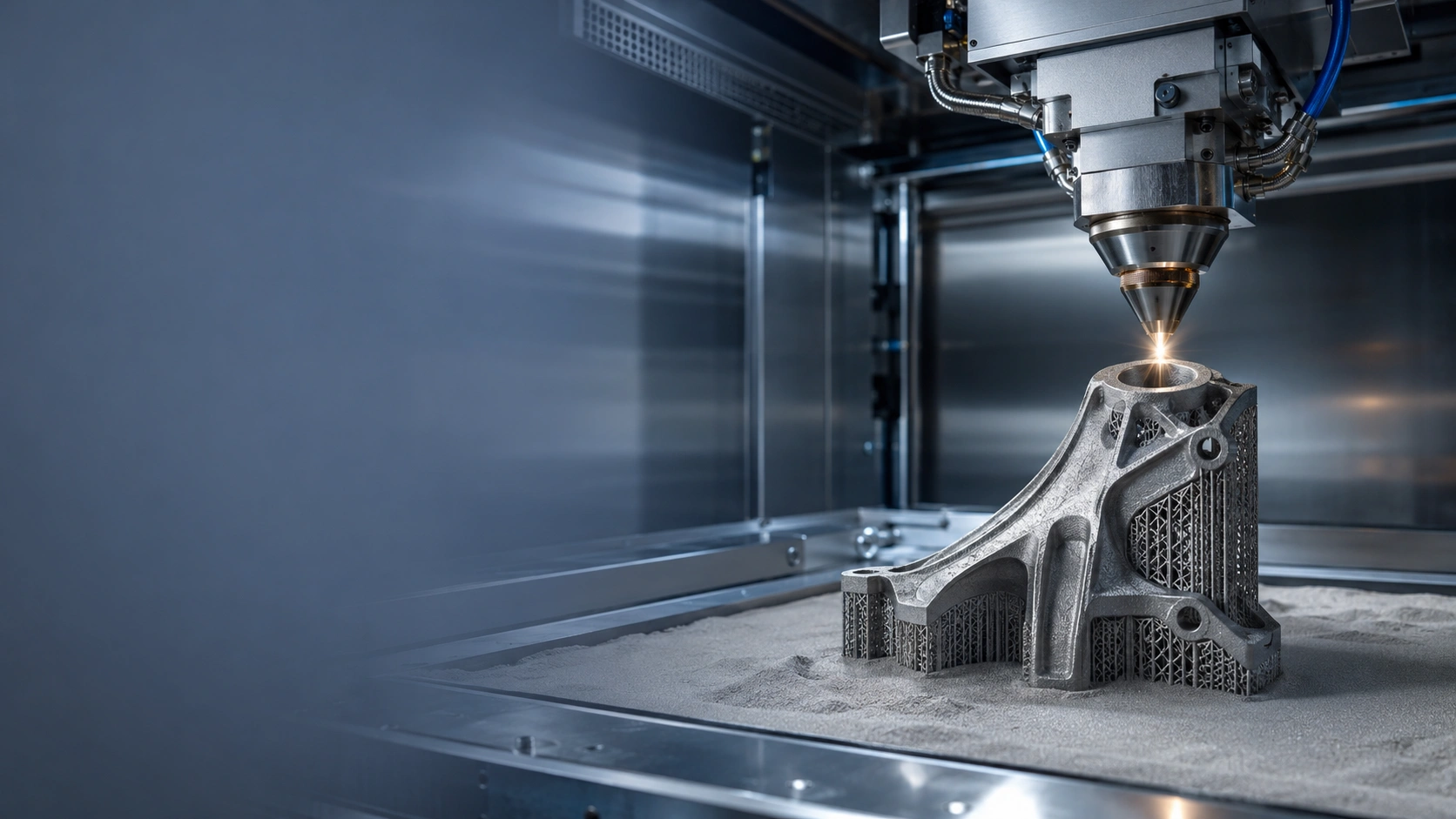
Yes. Ti-6Al-4V is one of the most established titanium alloys for metal additive manufacturing. ASTM F2924 covers additively manufactured Ti-6Al-4V components produced by full-melt powder bed fusion processes such as laser and electron-beam melting. Final properties depend on powder chemistry, build parameters, orientation, thermal processing, machining, inspection and the governing customer specification.
What is the difference between Ti-6Al-4V Grade 5 and Grade 23 for additive manufacturing?
Grade 23 is the extra-low-interstitial version of Ti-6Al-4V, with tighter chemistry limits intended to support improved ductility and toughness. This generally supports improved ductility and toughness, while Grade 5 is widely used for structural applications requiring a strong strength-to-weight ratio. The correct grade depends on the governing specification, mechanical requirements, environment and qualification plan.
Why is titanium attractive for additive manufacturing?
Titanium combines low density, high specific strength and corrosion resistance, but conventional machining can create high material waste and long cycle times. LPBF can build closer to final geometry, create internal features and lightweight structures, consolidate parts and reduce the amount of expensive titanium removed as chips.
Why choose titanium additive manufacturing instead of machining from billet?
Titanium AM is especially attractive for complex components with high machining buy-to-fly ratios, inaccessible internal geometry, topology-optimized structures or low-volume production where material waste and machining time are significant. Machining remains the preferred route for many simple geometries and is commonly required after AM to establish critical datums, fits, threads and surface finishes.
When should I choose titanium additive manufacturing instead of titanium casting or forging?
LPBF is often attractive for low-volume or evolving designs, complex internal passages, lattice or topology-optimized structures and programs where conventional tooling lead time is difficult to justify. Casting can become more economical for mature repeat-production complex shapes, while forging may be preferred when a wrought structure, specific product form or established structural qualification route is required. Final selection depends on geometry, quantity, loading, specification, inspection and total delivered cost.
Does LPBF Ti-6Al-4V require heat treatment?
Thermal processing is commonly used because the as-built LPBF Ti-6Al-4V microstructure can contain fine acicular alpha-prime martensite and significant residual stress. Heat treatment can reduce residual stress and transform the microstructure toward alpha-plus-beta conditions with different strength and ductility. The exact cycle should follow the qualified AM process and applicable specification.
Is HIP always required for titanium additive manufacturing?
No. HIP may be required by a drawing, material specification, qualification plan, fatigue objective or customer requirement, but it is not universally required for every Ti-6Al-4V LPBF component. The need for HIP depends on process capability, internal-defect acceptance, fatigue requirements, part criticality and the qualified production route.
What are common quality risks in titanium LPBF?
Potential risks include lack-of-fusion defects, gas or keyhole porosity, residual stress, distortion, rough internal surfaces, trapped powder, anisotropy, oxygen or nitrogen pickup and microstructural variation. Titanium is especially sensitive to interstitial contamination at elevated temperature, so powder handling, inert atmosphere, thermal processing and surface control are important parts of the qualification plan.
What applications are suitable for titanium additive manufacturing?
Typical candidates include lightweight aerospace brackets and structural hardware, propulsion and fluid-system components, heat-management parts, complex manifolds, unmanned-system hardware, high-value industrial components and selected Grade 23 applications where extra-low-interstitial chemistry is required. Application suitability depends on the material specification, loading, environment, surface condition and qualification requirements.
What should procurement teams evaluate in a titanium additive manufacturing supplier?
Evaluate supported titanium grades and AM standards, powder chemistry and interstitial control, lot traceability, qualified build parameters, atmosphere control, heat treatment, HIP strategy, finish machining, fatigue-critical surface treatment, NDT or CT capability, mechanical testing, documentation and whether the supplier can compare additive manufacturing with casting, forging and machining.
What information should I send for a titanium additive manufacturing RFQ?
Provide the 3D CAD model and drawing when available, Ti-6Al-4V grade and applicable AM specification, prototype and annual quantities, critical dimensions and GD&T, service environment, mechanical and fatigue requirements, surface finish, heat treatment, HIP, NDT or CT requirements, documentation, qualification requirements and requested delivery schedule. Identify inaccessible internal passages and fatigue-critical surfaces.