ForceBeyond Logo
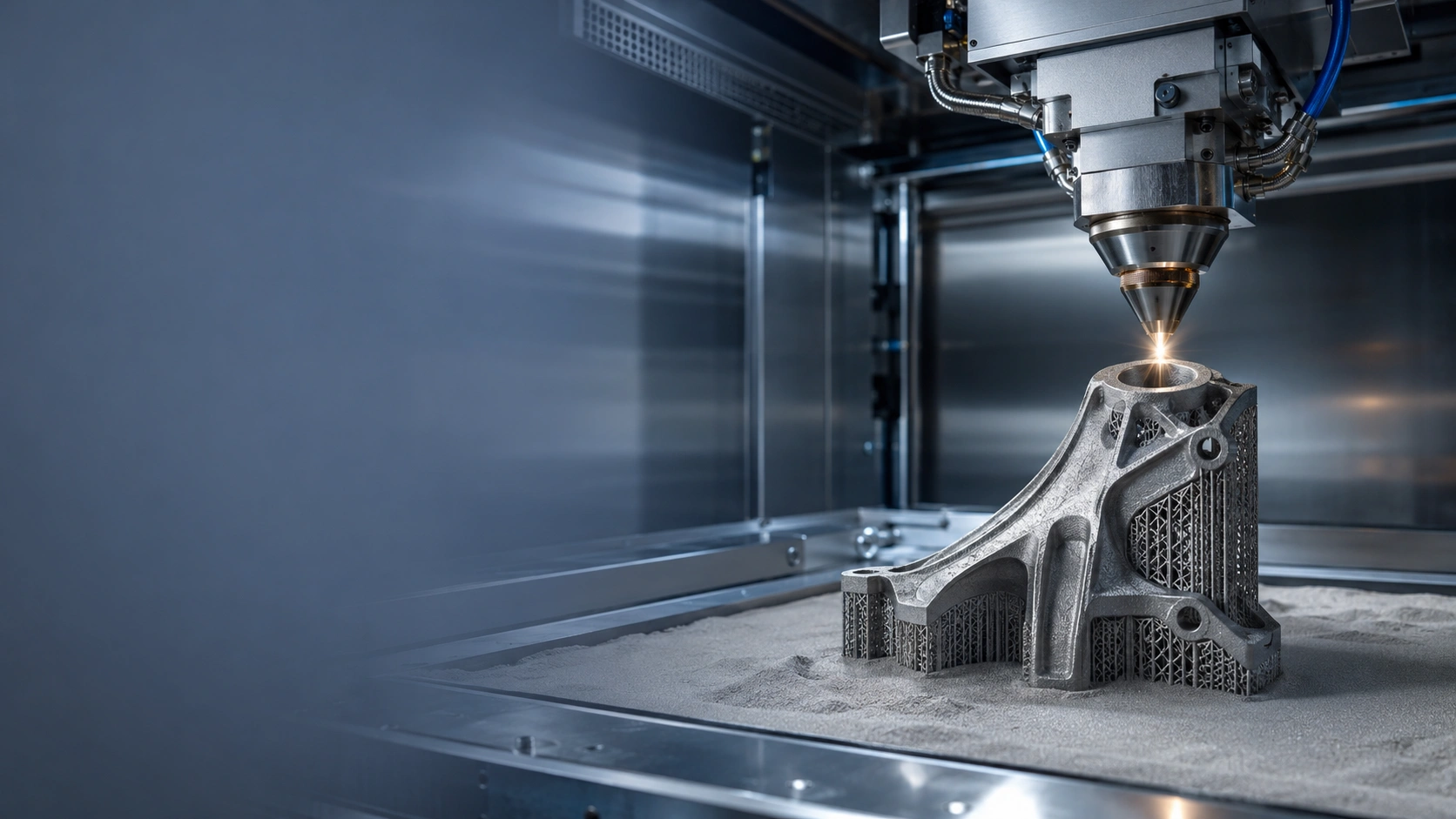
Inconel 625 component being produced by laser powder bed fusion metal additive manufacturing

Inconel 625 Additive Manufacturing Services

ForceBeyond provides Inconel 625 additive manufacturing services for complex, corrosion-resistant components using laser powder bed fusion (LPBF), with coordinated thermal post-processing, HIP where required, precision CNC finish machining, NDT and dimensional inspection. Inconel 625 (UNS N06625) is particularly useful when a program combines severe corrosion or oxidation exposure with internal passages, consolidated flow geometry, low-to-moderate quantities, high conventional tooling cost or aggressive development schedules.

Why Inconel 625 Is a Leading Corrosion-Resistant Alloy for Metal Additive Manufacturing

Inconel 625 is a nickel-chromium-molybdenum-niobium alloy valued for its combination of corrosion resistance, oxidation resistance, strength, toughness and weldability. Its chemistry makes it especially attractive for marine, chemical-processing, aerospace and energy applications where both aggressive environments and demanding geometry are present.

Unlike precipitation-hardened Inconel 718, the strength of Inconel 625 comes primarily from solid-solution strengthening. Molybdenum and niobium contribute to solid-solution strengthening, while the alloy's chromium- and molybdenum-rich chemistry supports resistance to oxidation and localized corrosion in many aggressive environments. This distinction matters in additive manufacturing because the thermal-processing strategy and final material condition are different from those used for precipitation-hardened alloys.

Inconel 625 is also well established in industrial LPBF systems. ASTM F3056 specifically covers full-melt powder bed fusion of UNS N06625, and major AM material suppliers publish qualified process and powder data for the alloy. The engineering value is not simply that Alloy 625 can be printed, but that its corrosion-resistant chemistry can be placed into complex fluid, thermal and structural geometries that may be difficult to cast, machine or assemble conventionally.

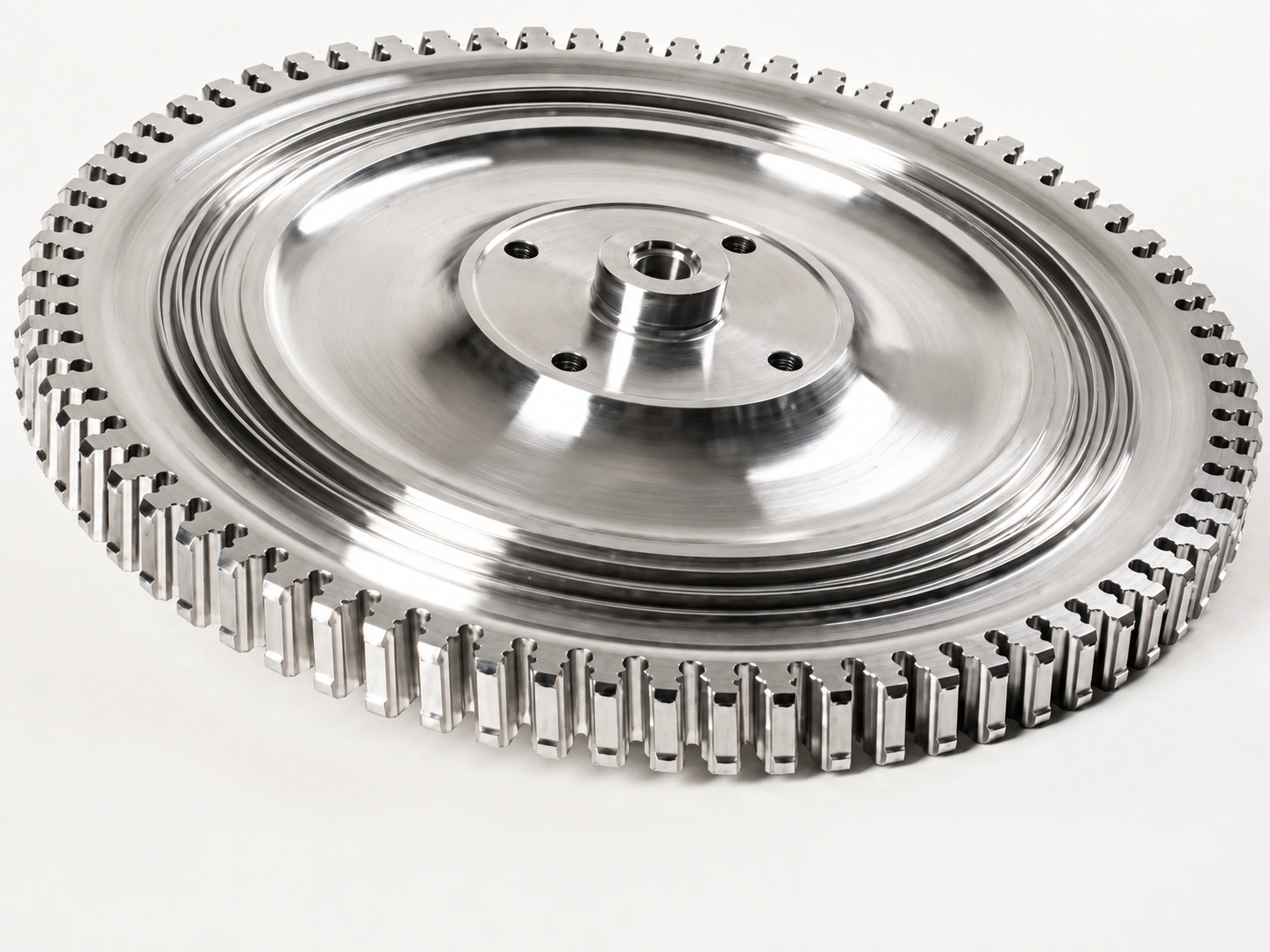
Finished Inconel 625 component representing corrosion-resistant aerospace and energy applications

Inconel 625 Metallurgy: Why Solid-Solution Strengthening Matters in AM

Inconel 625 differs fundamentally from precipitation-hardened nickel alloys. Its primary strengthening mechanism is the solid-solution effect of alloying elements such as molybdenum and niobium within the nickel-chromium matrix. This gives the alloy useful strength and toughness across a broad temperature range without relying on a dedicated aging treatment to create the same type of strengthening precipitates used in Inconel 718.

Core Alloying Functions

  • Nickel: Provides the primary matrix and supports broad corrosion resistance and toughness.
  • Chromium: Supports oxidation resistance and formation of a protective passive surface film.
  • Molybdenum: Contributes to solid-solution strength and resistance to localized corrosion.
  • Niobium: Adds solid-solution strengthening and influences segregation and secondary-phase formation during AM thermal cycles.

Why This Matters for LPBF

  • 625 has strong weldability compared with many high-performance nickel alloys.
  • The alloy is suitable for rapid solidification inherent to LPBF, but local segregation still requires control.
  • Thermal post-processing is used to manage residual stress and microstructure rather than to create the same precipitation-hardening response as 718.
  • Final corrosion performance must be verified for the actual AM process, heat treatment and service environment.

How LPBF Changes the Microstructure of Inconel 625

LPBF repeatedly melts and rapidly solidifies thin layers of Alloy 625. NIST research has shown that scan strategy, laser power, scan speed, hatch spacing and thermal gradients influence cellular and columnar grain structures in additively manufactured IN625. The resulting microstructure is therefore tied directly to the manufacturing process rather than being defined by chemistry alone.

Directional Solidification and Columnar Grain Growth

Rapid directional heat flow can create elongated or columnar grain structures aligned with local thermal gradients. Build orientation and scan strategy can therefore influence microstructural texture, anisotropy and deformation behavior.

Niobium and Molybdenum Segregation

During rapid solidification, niobium and molybdenum can segregate into interdendritic regions. These chemistry variations can influence downstream phase formation during stress relief or other thermal treatments, making the thermal-processing route an important part of AM material qualification.

Secondary-Phase Formation During Thermal Processing

NIST has shown that certain stress-relief treatments can promote formation of Ni3Nb delta phase in segregated regions of LPBF Inconel 625. Excessive or poorly controlled secondary-phase formation can reduce ductility, fracture toughness or other performance characteristics. For this reason, post-build thermal processing should follow an AM-qualified route rather than a generic furnace recipe.

Inconel 625 Additive Manufacturing Capabilities

For sourcing teams, the practical question is not only whether Inconel 625 can be printed, but whether the complete manufacturing route can be coordinated from build preparation through final inspection. ForceBeyond supports project-specific LPBF programs with downstream manufacturing and quality operations aligned to the drawing, purchase order and qualification requirements.

Inconel 625 AM Service Scope Availability and acceptance criteria remain project- and specification-dependent.
Capability Support Commercial / Engineering Value
Material Inconel 625 / UNS N06625 Corrosion-resistant nickel alloy for marine, chemical-processing, aerospace and energy applications.
Primary AM Route LPBF Supports complex near-net geometry, internal passages and digital design iteration without conventional hard tooling.
Prototype & Development Builds Supported Useful for design validation, flow-path optimization and engineering changes before a mature production route is finalized.
Low-Volume Production Supported Can reduce tooling dependency where annual volume does not justify a dedicated casting or forging tool.
Thermal Post-Processing Coordinated per specification Used to manage residual stress, microstructure and final material condition.
HIP Available where required May reduce suitable internal porosity and support density, fatigue or qualification objectives.
CNC Finish Machining Available Establishes critical datums, sealing surfaces, threads, bores and tight final tolerances.
NDT / CT / Dimensional Inspection Project-specific Inspection is selected around geometry, defect risks, corrosion criticality and governing acceptance criteria.
Documentation & Traceability Per drawing / PO requirements Can include powder lot, process, post-processing and inspection records as required by the program.
Manufacturing Route Review AM vs. casting / forging / machining Helps sourcing teams avoid selecting additive manufacturing when another route provides a better total-cost or qualification outcome.

When Does Inconel 625 Additive Manufacturing Make Sense?

Inconel 625 is expensive to machine, corrosion-resistant flow hardware often contains difficult internal geometry, and conventional superalloy tooling can require substantial development time. LPBF becomes most compelling when the part uses these advantages rather than simply replacing an already efficient conventional route.

Strong Candidates for LPBF Inconel 625

  • Complex flow passages: Curved manifolds, cooling paths or fluid channels difficult to drill or cast with removable cores.
  • Corrosion-resistant part consolidation: Replace multiple welded or brazed flow components with a single build where engineering requirements permit.
  • Low-volume high-value production: Quantities where dedicated casting or forging tooling is difficult to justify.
  • Rapid design iteration: Programs where flow geometry or interfaces are still evolving.
  • Poor machining buy-to-fly ratio: Components that would otherwise remove large amounts of expensive nickel alloy stock.
  • Compact heat-transfer geometry: Thin walls, internal passages and integrated thermal structures.
  • Bridge or replacement production: Early or low-volume parts while conventional tooling is unavailable or under development.

When a Traditional Route May Be Better

  • Stable high-volume production: Investment casting may provide lower recurring cost after tooling is amortized.
  • Simple machinable geometry: CNC machining can remain the most direct route for parts with accessible features and efficient stock utilization.
  • Wrought product requirements: Forging or machining from wrought stock may be required by the governing specification or structural design basis.
  • Existing qualified tooling: AM may not create sufficient commercial value if the conventional process is already mature and validated.
  • Part size outside practical LPBF build envelopes: Casting, forging or another AM process may provide a more efficient route.

Inconel 625 LPBF Manufacturing Process

LPBF builds the component by selectively melting successive layers of Inconel 625 powder according to sliced CAD geometry. Printing is only one stage of the complete manufacturing route. Powder controls, build orientation, support strategy, atmosphere, thermal history, post-processing and inspection all influence final part performance.

Typical Inconel 625 Additive Manufacturing Route The exact sequence depends on the qualified process, drawing, specification and customer requirements.
Stage Purpose Key Engineering Considerations
1. Design & Build Preparation Orient the component, generate supports and prepare the build file. Critical surfaces, flow passages, support access, powder removal, distortion risk and machining allowance.
2. Powder & Process Control Confirm powder lot, particle characteristics and qualified machine parameters. Chemistry, particle-size distribution, handling, reuse controls, atmosphere and traceability.
3. LPBF Build Laser selectively melts Inconel 625 powder layer by layer. Laser parameters, scan strategy, layer quality, atmosphere control and process monitoring.
4. Stress Relief / Thermal Processing Manage residual stress and modify the as-built microstructure as required. Cycle must avoid undesirable phase formation and match the validated production route.
5. Build & Support Removal Separate the component from the plate and remove supports. Access, local surface condition, thin features, internal passages and dimensional stability.
6. HIP Where Required Reduce suitable internal porosity and support density or fatigue objectives. Not universal; apply according to drawing, specification, qualification plan and service conditions.
7. CNC Finish Machining Establish critical datums, sealing surfaces, bores, threads and final tolerances. Plan machining stock during AM design and coordinate the final thermal condition.
8. Inspection & Documentation Verify geometry, surface condition, internal quality and required material properties. Inspection method and acceptance criteria depend on geometry, corrosion criticality and governing specification.

Inconel 625 Additive Manufacturing vs. Casting, Forging and CNC Machining

ForceBeyond already supports Inconel 625 casting, Inconel 625 forging and precision machining of nickel-based alloys. Additive manufacturing should be treated as another manufacturing route—not as a universal replacement for conventional production.

Manufacturing Route Selection for Inconel 625
Decision Factor LPBF Additive Investment Casting Forging CNC from Stock
Prototype / design iteration Excellent Good with printed patterns; production tooling adds time Limited when dedicated dies are required Excellent for machinable geometry
Complex internal flow passages Excellent Good when core technology is practical Limited Limited by tool access
Dedicated tooling Low Typically required for mature production Often required for closed-die production Low, but fixtures may be required
High-volume economics Application dependent Strong Strong Geometry and cycle-time dependent
Corrosion-resistant complex geometry Strong Strong Geometry limited Strong for accessible features
Material utilization High near-net potential High near-net potential High with near-net preforms Can be poor for heavily machined billet parts
Tight final tolerances Finish machining commonly required Finish machining commonly required Finish machining commonly required Primary advantage

LPBF vs. Inconel 625 Investment Casting

LPBF can remove conventional tooling from early development and directly create internal flow paths that might otherwise require complicated ceramic cores. Investment casting remains highly competitive for repeat production of complex corrosion-resistant components, particularly when geometry is stable and tooling cost can be distributed over larger quantities.

LPBF vs. Inconel 625 Forging

LPBF provides greater geometric freedom, while forging may be preferred when a wrought product form, directional material flow, section size or established wrought specification is required. The governing drawing and specification must determine whether an AM product form is acceptable.

LPBF vs. Machining from Inconel 625 Stock

Direct machining remains excellent for accessible geometry and tight tolerances, but Alloy 625 is costly and demanding to machine. For parts with a poor buy-to-fly ratio or inaccessible internal passages, LPBF can place material closer to the final shape before precision finish machining establishes critical interfaces.

Typical Inconel 625 Additive Manufacturing Applications

The strongest Inconel 625 AM applications combine harsh-environment resistance with geometry that benefits from digital manufacturing. The value usually comes from integrated flow paths, reduced assembly count, low tooling demand or compact thermal design—not simply from replacing a conventional part one-for-one.

Marine & Seawater Systems

  • Corrosion-resistant manifolds
  • Compact fluid-routing hardware
  • Seawater handling components
  • Low-volume replacement hardware
  • Complex valve and flow-control parts

Chemical Processing & Oil / Gas

  • Corrosion-resistant flow bodies
  • Instrumentation housings
  • Complex manifolds and nozzles
  • Heat-transfer hardware
  • Low-volume process equipment components

Aerospace & Energy

  • Gas-turbine ducting
  • Combustion liners and spray-bar-type hardware
  • Heat shields
  • Thermally loaded brackets and housings
  • Development and qualification components

Lead-Time Advantage for Inconel 625 Development and Low-Volume Production

For the right program, one of the largest commercial advantages of Inconel 625 AM is the ability to reduce dependence on conventional tooling. A design can move from released CAD geometry into build preparation without first waiting for wax tooling or dedicated forging dies. This can be particularly valuable during prototype builds, engineering validation, bridge production, low-volume production and replacement-part programs.

Typical Conventional Development Route

CAD → tooling design → tooling manufacture → process development → first articles → post-processing → inspection

Tooling can be worthwhile for mature production, but it adds a development step and may need revision after geometry changes.

Typical LPBF Development Route

CAD → build preparation → LPBF → thermal processing → machining → inspection

Design changes can often be introduced through the digital model and build preparation rather than remanufacturing conventional production tooling.

Printing itself is not the complete lead time. Thermal processing, HIP where required, machining, inspection, corrosion verification and qualification still need to be scheduled. The correct comparison is therefore total manufacturing lead time, not printer cycle time alone.

Quality Risks to Control in LPBF Inconel 625

A mature AM route depends on controlling both process defects and material-condition risks. Complex geometry can provide major design advantages, but it can also make inspection, powder removal and finishing more difficult.

Build-Related Risks

  • Lack of fusion: Incomplete melting between tracks or layers can create irregular internal defects.
  • Gas or keyhole porosity: Process instability can produce internal pores that may affect fatigue or leak performance.
  • Residual stress and distortion: Repeated rapid heating and cooling can move thin walls or long unsupported features.
  • Surface roughness: Internal channels and down-facing surfaces can be difficult to finish conventionally.
  • Powder entrapment: Closed or tortuous passages must allow powder evacuation and cleaning.

Metallurgical & Qualification Risks

  • Microsegregation: Nb- and Mo-rich interdendritic regions can form during rapid solidification.
  • Secondary phases: Poorly selected thermal cycles can promote delta-phase or other undesirable phase formation.
  • Anisotropy: Directional solidification and build orientation can influence mechanical response.
  • Corrosion verification: Corrosion resistance should be validated for the actual AM condition and service environment.
  • Lot-to-lot consistency: Powder, machine parameters, reuse history and post-processing require traceable controls.

Design Considerations for LPBF Inconel 625 Parts

Build Orientation & Anisotropy

Orientation affects support requirements, surface condition, thermal history, distortion risk and potentially mechanical response. Critical load directions, corrosion-critical surfaces and final machined datums should be reviewed during build preparation.

Internal Channels & Powder Removal

LPBF can create internal passages that cannot be machined conventionally, but each enclosed feature must still be evaluated for powder evacuation, cleaning, inspection access, flow performance and minimum feature size.

Surface Condition in Corrosive Service

As-built LPBF surfaces are generally rougher than precision-machined surfaces. Surface condition can influence fluid flow, stress concentration, cleanliness and corrosion behavior. Corrosion-critical or sealing surfaces should be identified for machining, polishing or other finishing where required.

Support Removal

Support structures must be reachable after the build. A geometry that is technically printable but difficult to separate from supports or clean internally may not be production-ready.

Machining Allowance

Critical surfaces should be designed with appropriate stock for final machining. The AM model, datum strategy, fixture approach and final thermal condition should be coordinated before build release.

Post-Processing Inconel 625: From Printed Shape to Finished Component

Inconel 625 AM should be treated as an integrated manufacturing route. Printing creates the geometry, while downstream thermal, precision and quality operations establish the required final condition.

Stress Relief and Thermal Post-Processing

Thermal processing can reduce residual stress and modify the rapid-solidification microstructure. Because AM Alloy 625 can contain segregated Nb- and Mo-rich regions, heat-treatment selection must consider potential secondary-phase formation and the required balance of strength, ductility, toughness and corrosion performance.

Hot Isostatic Pressing (HIP)

HIP may be used to reduce suitable internal porosity and support density, fatigue or qualification objectives. It is not a universal requirement and does not replace appropriate process control, leak testing or inspection.

Precision CNC Machining

Final precision machining can establish tight tolerances and surface finishes on sealing faces, bores, threads, datums and interfaces. Machining stock should be included during AM design rather than treated as an afterthought.

NDT, CT and Dimensional Inspection

The inspection plan should reflect the AM geometry and expected defect modes. Testing and inspection may include dimensional metrology, penetrant inspection, radiography, industrial CT, ultrasonic techniques, leak testing, metallography or mechanical testing according to drawing and specification requirements.


Why Source Inconel 625 Additive Manufacturing Through ForceBeyond?

ForceBeyond approaches additive manufacturing as one option within a broader manufacturing decision, not as the default answer for every Inconel 625 part. This is particularly important for sourcing and engineering teams because the most economical route can change with geometry, volume, qualification status and the product lifecycle.

Multi-Process Manufacturing Review

A low-volume manifold with inaccessible internal passages may favor LPBF, while a mature repeat-production valve body may be better suited to Inconel 625 investment casting. A wrought structural part may require forging, and a simple precision component may be most efficient when machined directly from stock.

Integrated Post-Processing

The build itself is only one stage. ForceBeyond can coordinate thermal processing, HIP where required, precision machining and testing and inspection so the sourcing decision is based on the complete delivered component rather than printer capability alone.

Prototype-to-Production Flexibility

LPBF can support prototype, validation and bridge-production needs while a conventional production route is still being evaluated or tooled. As quantity and design maturity increase, the sourcing strategy can be reviewed again against casting, forging or machining economics.

Engineering and Supplier-Risk Reduction

Coordinating AM, post-processing, machining and inspection through one manufacturing program can reduce avoidable hand-offs, clarify responsibility for dimensional and material requirements, and simplify technical communication during qualification and production release.

What Should Procurement Teams Evaluate in an Inconel 625 AM Supplier?

A supplier should be evaluated on more than printer availability. For critical Inconel 625 programs, procurement and engineering teams should review whether the supplier can control the full material and process chain and whether those controls match the applicable specification and service environment.

  • Applicable AM standard: Confirm whether the program is supported to ASTM F3056 or another customer-approved specification.
  • Powder traceability: Review powder chemistry, lot control, particle characterization, handling and reuse rules.
  • Qualified build parameters: Confirm the machine, scan strategy, process window and monitoring approach used for production.
  • Thermal-processing control: Verify that stress relief or other thermal cycles are qualified for LPBF Inconel 625 and do not introduce unacceptable phase changes.
  • HIP strategy: Determine whether HIP is required by the drawing, qualification plan or service risk, rather than assuming it is universal.
  • Finish-machining capability: Confirm how datums, sealing faces, bores, threads and critical tolerances will be completed after the build.
  • Internal-feature inspection: Review CT, radiography, leak testing or other methods when hidden channels or internal defects are critical.
  • Corrosion verification: Confirm whether corrosion-related acceptance criteria are defined for the actual AM material condition and service environment.
  • Coupon and mechanical testing: Establish when witness coupons, density, tensile, hardness, metallography or other tests are required.
  • Documentation package: Define the required material certificates, process records, inspection reports, traceability and qualification deliverables before production.
  • Alternate-route capability: A supplier that can also evaluate casting, forging and machining may help avoid unnecessary AM cost when geometry or volume no longer supports additive manufacturing.

Inconel 625 Additive Manufacturing Standards & Qualification

Qualification requirements vary by industry and application. The material designation alone is not sufficient: the purchase order and drawing should identify the applicable AM process specification, material condition, acceptance criteria, thermal processing, HIP, testing and documentation requirements.

Reference Relevance to Inconel 625 AM
ASTM F3056 Standard specification covering additive manufacturing of nickel alloy UNS N06625 using full-melt powder bed fusion processes.
ASTM F3301 Addresses thermal post-processing of metal powder bed fusion parts, including UNS N06625.
ASTM F3049 Guide for characterizing metal powders used in additive manufacturing processes.
Customer / Industry Specifications May define qualified machine/process routes, corrosion testing, heat treatment, HIP, mechanical properties, inspection, lot controls, traceability and acceptance criteria.
Drawing & Purchase Order Should control final geometry, CTQs, material condition, documentation, NDT, corrosion verification, dimensional inspection and delivery requirements.

Conventional Inconel 625 casting or wrought specifications should not be assumed to apply directly to LPBF product without explicit engineering and contractual approval. The required standard must match the actual product form and manufacturing route.

What to Include in an Inconel 625 Additive Manufacturing RFQ

A complete technical package allows the engineering team to determine whether LPBF is appropriate and to plan corrosion control, post-processing and inspection before quoting the build.

  • 3D CAD model: Native or neutral geometry suitable for build and manufacturability review.
  • 2D drawing: Critical dimensions, GD&T, datums, threads, sealing faces, surface finishes and inspection requirements.
  • Material requirement: Inconel 625 / UNS N06625 and the applicable AM material or customer specification.
  • Quantity: Prototype quantity, batch size and expected annual volume.
  • Service environment: Seawater, chlorides, acids, temperature, pressure, fatigue and other corrosion conditions where relevant.
  • Mechanical / corrosion requirements: Required tensile, hardness, corrosion, leak or other acceptance criteria when specified.
  • Post-processing: Stress relief, thermal treatment, HIP, machining, polishing or coating requirements.
  • Inspection: NDT method, CT, leak testing, acceptance criteria, dimensional inspection and sampling frequency.
  • Documentation: Powder lot traceability, process records, inspection reports, certificates and qualification deliverables.
  • Delivery requirement: Prototype milestone, qualification schedule and production delivery targets.

Choose the Inconel 625 Manufacturing Route by Part Requirements

ForceBeyond can evaluate several established Inconel 625 manufacturing routes instead of forcing every project into one process. A low-volume manifold with inaccessible internal passages may be an excellent LPBF candidate; a mature high-volume corrosion-resistant housing may fit investment casting; a wrought structural component may require forging; and a simple precision component may be best produced directly from wrought stock by CNC machining.

The manufacturing decision should consider geometry, quantity, corrosion environment, tooling, development lead time, material utilization, mechanical-performance requirements, inspection, qualification and total delivered cost. For programs that evolve from prototype to mature production, the optimal route can also change over the product lifecycle.

Inconel 625 Additive Manufacturing FAQ

Can Inconel 625 be additively manufactured?

Yes. Inconel 625 (UNS N06625) is an established nickel-based alloy for metal additive manufacturing. ASTM F3056 specifically covers additively manufactured UNS N06625 components produced by full-melt powder bed fusion processes such as laser and electron-beam melting. Final part properties depend on powder quality, qualified process parameters, build orientation, thermal processing, machining, inspection and the governing customer specification.

Why is Inconel 625 well suited to laser powder bed fusion?

Inconel 625 combines corrosion and oxidation resistance, high strength over a broad temperature range, good toughness and strong weldability. Its strength is derived primarily from solid-solution strengthening by molybdenum and niobium rather than precipitation hardening, and the alloy has become a mature material for LPBF systems used in aerospace, energy, marine and chemical-processing applications.

When should I choose Inconel 625 additive manufacturing instead of investment casting?

LPBF is often attractive for prototypes, low-volume programs, complex internal passages, consolidated assemblies and applications where tooling lead time is difficult to justify. Investment casting can become more economical for mature repeat-production programs when tooling can be amortized over larger quantities. The correct route depends on geometry, quantity, corrosion environment, specification, inspection requirements, lead time and total cost.

When should I choose Inconel 625 additive manufacturing instead of CNC machining?

Additive manufacturing is especially useful when a part has inaccessible internal geometry, high material-removal requirements, consolidated flow paths or a poor machining buy-to-fly ratio. CNC machining remains highly effective for simple accessible geometry, tight tolerances and smooth surface finishes. Many Inconel 625 AM components still require finish machining on critical interfaces.

Why choose Inconel 625 instead of Inconel 718 for additive manufacturing?

Inconel 625 is generally selected when corrosion resistance, chloride resistance, chemical-processing exposure or marine service are primary design drivers. Inconel 718 is generally selected when higher mechanical strength and precipitation-hardened performance are more important. Both alloys are mature AM materials, but the correct choice depends on service environment, temperature, loading, governing specification and qualification requirements.

Does additively manufactured Inconel 625 require heat treatment?

Thermal processing is commonly used to manage residual stress, microstructure and final property requirements, but the required cycle depends on the qualified AM route and application. AM Inconel 625 has a distinct solidification microstructure, including local niobium and molybdenum segregation, so heat-treatment assumptions should follow an AM-specific specification or validated production plan rather than being copied automatically from wrought material.

Is HIP always required for LPBF Inconel 625?

No. Hot Isostatic Pressing may be specified to reduce certain internal porosity or support density, fatigue and qualification objectives, but it is not automatically required for every LPBF Inconel 625 component. HIP requirements should follow the drawing, material specification, qualification plan, service conditions and customer requirements.

What are common quality risks in LPBF Inconel 625?

Potential risks include lack-of-fusion defects, gas or keyhole porosity, residual stress, distortion, rough internal surfaces, trapped powder, dimensional variation and microstructural segregation. Heat treatment can also change phase balance, so thermal processing must be qualified for the required mechanical and corrosion performance. Inspection and process controls should be selected according to part criticality and geometry.

What applications are suitable for Inconel 625 additive manufacturing?

Typical candidates include complex marine and seawater hardware, chemical-processing components, gas-turbine ducting and combustion hardware, manifolds, compact heat-transfer components, corrosion-resistant flow bodies, aerospace hardware and other high-value parts that combine harsh-environment resistance with geometry that is difficult to manufacture conventionally.

What information should I send for an Inconel 625 additive manufacturing RFQ?

Provide the 3D CAD model and drawing when available, UNS N06625 or applicable material specification, prototype and annual quantities, service environment, critical dimensions and GD&T, required mechanical and corrosion properties, surface finish, heat treatment, HIP requirements, NDT and inspection criteria, documentation, certification and requested delivery schedule. Identify inaccessible internal passages and critical-to-quality surfaces.

Evaluate Inconel 625 Additive Manufacturing for Your Part

Send your geometry, material specification, quantity, corrosion environment, critical tolerances, delivery requirements and qualification needs. ForceBeyond can compare LPBF with Inconel 625 casting, forging and CNC machining to determine the most appropriate manufacturing route.

Inconel 625 Additive Manufacturing Technical Sources
Related Inconel 625 & Additive Manufacturing Resources