
ForceBeyond Logo
Hot-chamber zinc die casting production for precision ZAMAK components

Zinc Die Casting Services for Precision ZAMAK Components

Custom Zinc Die Casting for Precision ZAMAK Components

ForceBeyond provides custom zinc die casting services for precision housings, hardware, covers, connectors, brackets, decorative components, and industrial parts. Hot-chamber zinc die casting supports fast cycle times, fine feature reproduction, smooth surfaces, and repeatable near-net-shape production.

Programs may include ZAMAK 2, ZAMAK 3, ZAMAK 5, ZA-8, and application-specific zinc alloys. ForceBeyond coordinates tooling, die casting, precision machining, decorative plating, coating, inspection, assembly, and logistics through an integrated manufacturing network.

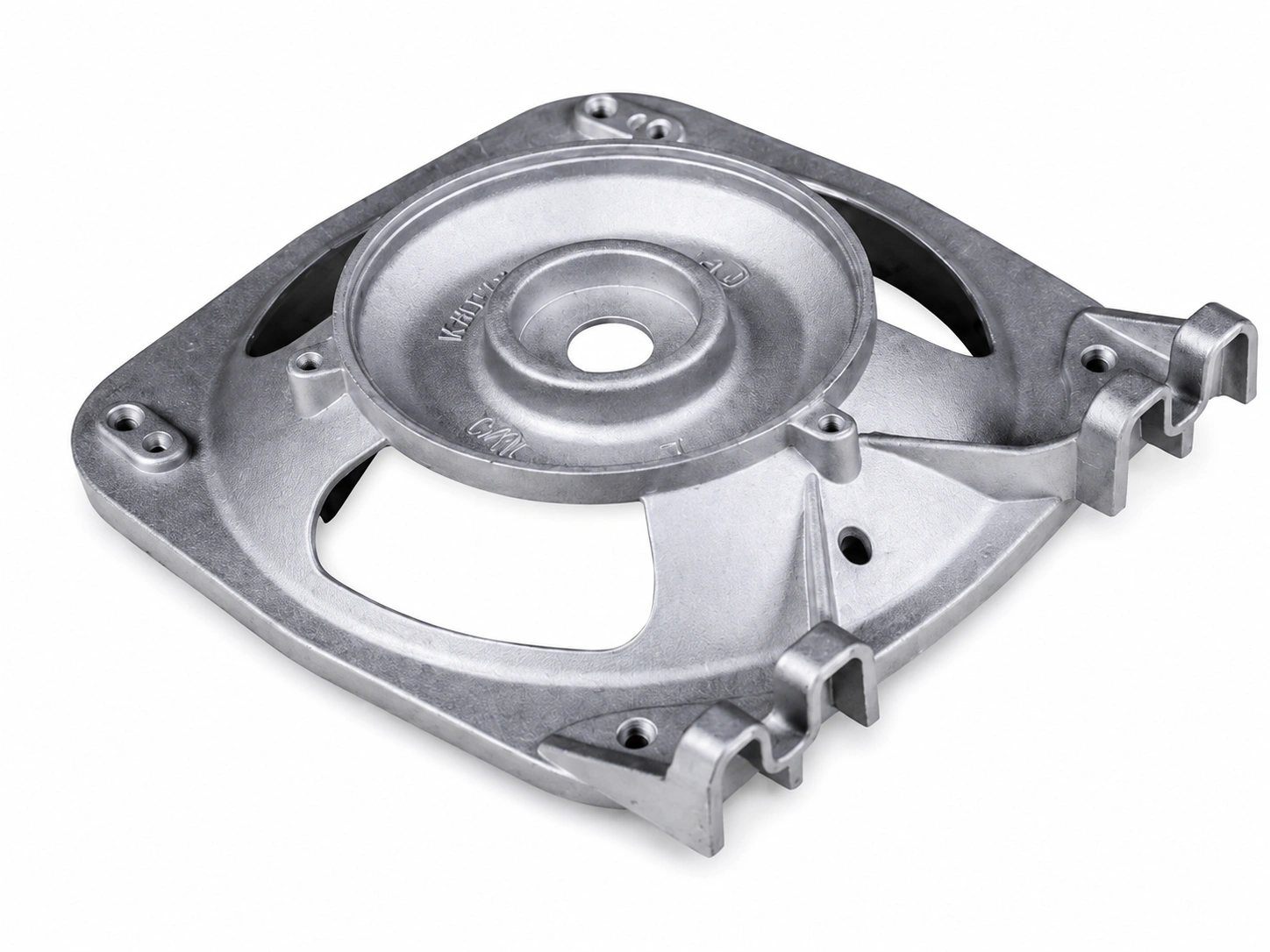
Precision zinc die-cast motor housing support bracket with structural ribs, mounting holes, and a central bearing opening on a white background.

When to Choose Zinc Die Casting

Zinc die casting is often selected when the design benefits from detailed geometry, thin sections, good dimensional stability, decorative appearance, long tooling life, and high-volume hot-chamber production.

  • Fine details: logos, lettering, textures, small bosses, thin ribs, and complex external features.
  • Decorative finishes: smooth zinc surfaces can support high-quality plating and polished cosmetic finishes.
  • Thin-wall components: high fluidity can support thinner sections than many aluminum die-casting designs, subject to geometry and process capability.
  • Compact mechanical parts: useful strength, hardness, damping, and dimensional stability for hardware and mechanisms.
  • High-volume production: hot-chamber processing supports short cycles and long tool life on suitable parts.

ZAMAK and Zinc Die Casting Alloy Selection

Alloy selection should consider strength, hardness, creep resistance, ductility, dimensional stability, plating response, castability, service temperature, and cost. Published property values vary by material condition and test method, so final requirements should be confirmed against the applicable specification.

Zinc Alloy Typical Selection Characteristics Representative Applications
ZAMAK 2 Higher copper content and strength than common general-purpose ZAMAK grades, with good hardness and creep resistance. Mechanical hardware, structural components, brackets, housings, and wear-related parts.
ZAMAK 3 Widely used general-purpose zinc alloy with good castability, dimensional stability, and finishing characteristics. Decorative hardware, enclosures, handles, fittings, consumer products, and precision housings.
ZAMAK 5 Higher strength and hardness than ZAMAK 3, with useful machining and plating characteristics. Automotive hardware, mechanical components, lock parts, brackets, and plated fittings.
ZA-8 High strength and creep resistance among hot-chamber zinc alloys, with good dimensional and finishing potential. Decorative components, mechanical hardware, structural parts, and premium plated products.

Zinc Die Casting vs. Aluminum Die Casting

Zinc generally offers better detail reproduction, thinner-wall potential, smoother cosmetic surfaces, longer die life, and heavier feel. Aluminum offers lower density, higher service-temperature capability, and different thermal-performance advantages.

The best choice depends on weight, strength, temperature, corrosion exposure, cosmetic requirements, production volume, wall thickness, and tooling economics.

Zinc Die Casting Design Guidelines

  • Uniform walls: maintain practical wall consistency to improve filling, cooling, and dimensional control.
  • Draft: provide sufficient draft for reliable ejection, particularly on textured surfaces and deep walls.
  • Fillets and radii: avoid sharp internal corners that can restrict flow and increase stress.
  • Threads and inserts: review whether threads should be cast, tapped, formed with slides, or added using inserts.
  • Cosmetic surfaces: define visible surfaces, parting lines, gates, ejector marks, polishing, and plating class before tooling release.
  • Machining allowance: add stock only where precision bores, sealing surfaces, datums, or fits require machining.

Hot-Chamber Zinc Die Casting Process

  1. Die preparation: the hardened steel die is cleaned, lubricated, and brought to operating temperature.
  2. Metal delivery: the gooseneck injection system remains immersed in the molten zinc bath.
  3. Injection: the plunger forces molten zinc through the gooseneck, nozzle, runner, and gate into the die cavity.
  4. Solidification: pressure is maintained while the casting cools and solidifies.
  5. Ejection and trimming: the die opens, ejector pins release the part, and runners, gates, and flash are removed.
  6. Secondary processing: parts may proceed through machining, polishing, plating, coating, inspection, assembly, and packaging.

Zinc Die Casting Tooling and Production Planning

Zinc’s lower casting temperature can support long die life, but actual tooling performance depends on alloy, geometry, die steel, thermal balance, shot count, maintenance, slides, and cosmetic requirements.

  • Gate and runner design: controls filling sequence, turbulence, air evacuation, and local surface quality.
  • Thermal balance: cooling and heating circuits help stabilize cycle time and dimensions.
  • Cosmetic tooling: polished cavities, texture control, replaceable inserts, and careful gate placement support visible surfaces.
  • Tool maintenance: preventive maintenance, shot tracking, spare inserts, ejector servicing, and flash control protect production consistency.
  • Capacity planning: projected volume, cavities, automation, trimming, plating, and downstream operations should be planned together.

Zinc Die Casting Plating and Surface Finishing

Zinc die castings are commonly selected for decorative and protective finishing. The coating system should match the alloy, cosmetic class, corrosion exposure, dimensional requirements, and service environment.

  • Decorative plating: copper-nickel-chrome and nickel systems for handles, fixtures, hardware, and consumer-facing components.
  • Protective coatings: painting, powder coating, conversion coatings, and application-specific corrosion-protection systems.
  • Mechanical preparation: trimming, deburring, sanding, polishing, vibratory finishing, and blasting before coating.
  • Cosmetic inspection: evaluation of pits, blisters, flow marks, scratches, plating coverage, gloss, texture, and color consistency.

Zinc Die Casting, Machining and Assembly

  • Precision CNC machining: drilling, tapping, reaming, milling, and finishing of precision bores, datums, and fits.
  • Inspection: dimensional verification, gauges, CMM reporting, coating-thickness checks, cosmetic inspection, and project-specific testing.
  • Assembly and kitting: inserts, fasteners, seals, hardware, sub-assembly, labeling, and protective packaging.
  • Secondary operations: coordinated trimming, deburring, machining, plating, finishing, inspection, and delivery preparation.

Zinc Die Casting Applications by Industry

  • Automotive and transportation: lock components, mirror brackets, seat mechanisms, interior trim, housings, and plated hardware.
  • HVAC, plumbing and flow control: handles, fittings, valve hardware, fixture components, and decorative plumbing parts.
  • Consumer and architectural hardware: door hardware, cabinet hardware, handles, locks, appliance components, and decorative products.
  • Electronics and instrumentation: connector housings, sensor enclosures, shielding components, knobs, frames, and precision hardware.
  • Medical and healthcare: equipment housings, handles, adjustment hardware, and nonimplant device components.
  • Industrial equipment: controls, housings, levers, brackets, covers, and high-volume precision components.

Frequently Asked Questions: Zinc Die Casting

Why choose zinc instead of aluminum for die casting?

Zinc is often selected when a component requires excellent detail reproduction, thin sections, dimensional stability, smooth cosmetic surfaces, decorative plating, or a heavier premium feel. Its lower casting temperature can also support long die life and short hot-chamber cycle times. Aluminum may be preferable when lower density, higher service temperature, or thermal performance is more important.

Can zinc die castings be plated?

Yes. Zinc alloys such as ZAMAK 3, ZAMAK 5, and ZA-8 are widely used for plated and decorative components. Common systems include copper-nickel-chrome, nickel, zinc-based protective coatings, painting, and powder coating. Surface preparation, alloy condition, cosmetic class, corrosion requirements, and plating thickness should be defined before tooling and production.

Do zinc die castings require secondary machining?

Many features can be produced near net shape, reducing the need for machining. Secondary CNC machining may still be required for precision bores, sealing surfaces, threads, bearing fits, datums, or features that cannot be formed reliably in the die. The machining plan should be coordinated with parting lines, ejector locations, draft, and casting tolerances.

What information is needed for a zinc die casting quote?

Provide a 2D drawing and, when available, a 3D CAD model, along with alloy preference, annual and batch quantity, critical tolerances, minimum wall thickness, cosmetic class, plating or coating, machining, inserts, inspection, assembly, packaging, tooling life, and delivery expectations.

Request a Zinc Die Casting Quote

Send your drawing, CAD model, ZAMAK alloy, annual volume, wall thickness, tolerance, cosmetic, plating, machining, assembly, tooling, and delivery requirements for an engineering review.

Technical References
Related Zinc Casting, Machining, Finishing and Quality Resources