Near-Net-Shape (NNS) Titanium Machining: High-Efficiency Finishing

ForceBeyond provides specialized Near-Net-Shape Titanium Machining designed to maximize the economic advantages of our NNS forging and investment casting programs. By utilizing high-speed 5-axis toolpaths and specialized “skin-cut” strategies, we reduce secondary CNC cycle times by 30% to 45%. Our Tier-1.5 integrated model ensures that the minimal machining allowance is precision-removed without inducing surface stress, delivering a final “Buy-to-Fly” ratio as low as 3.5:1.

Maximizing the NNS Advantage: Engineering for Speed

Machining a Near-Net-Shape (NNS) blank is fundamentally different from “hogging out” a solid block. It requires advanced work-holding and in-machine probing to align the toolpath with the pre-existing geometry.

  • Automated Part Probing: We utilize in-machine Renishaw probes to “locate” the NNS blank, ensuring the machining allowance (2mm–5mm) is distributed perfectly across all critical faces.
  • High-Speed “Skin” Machining: Because the bulk of the material is already removed, we focus on high-feed finishing paths that maintain a constant chip load and prevent tool deflection.
  • Minimized Setup Times: Our co-owned facilities use synchronized fixturing that moves parts from the forge or foundry directly into the CNC center with zero realignment errors.
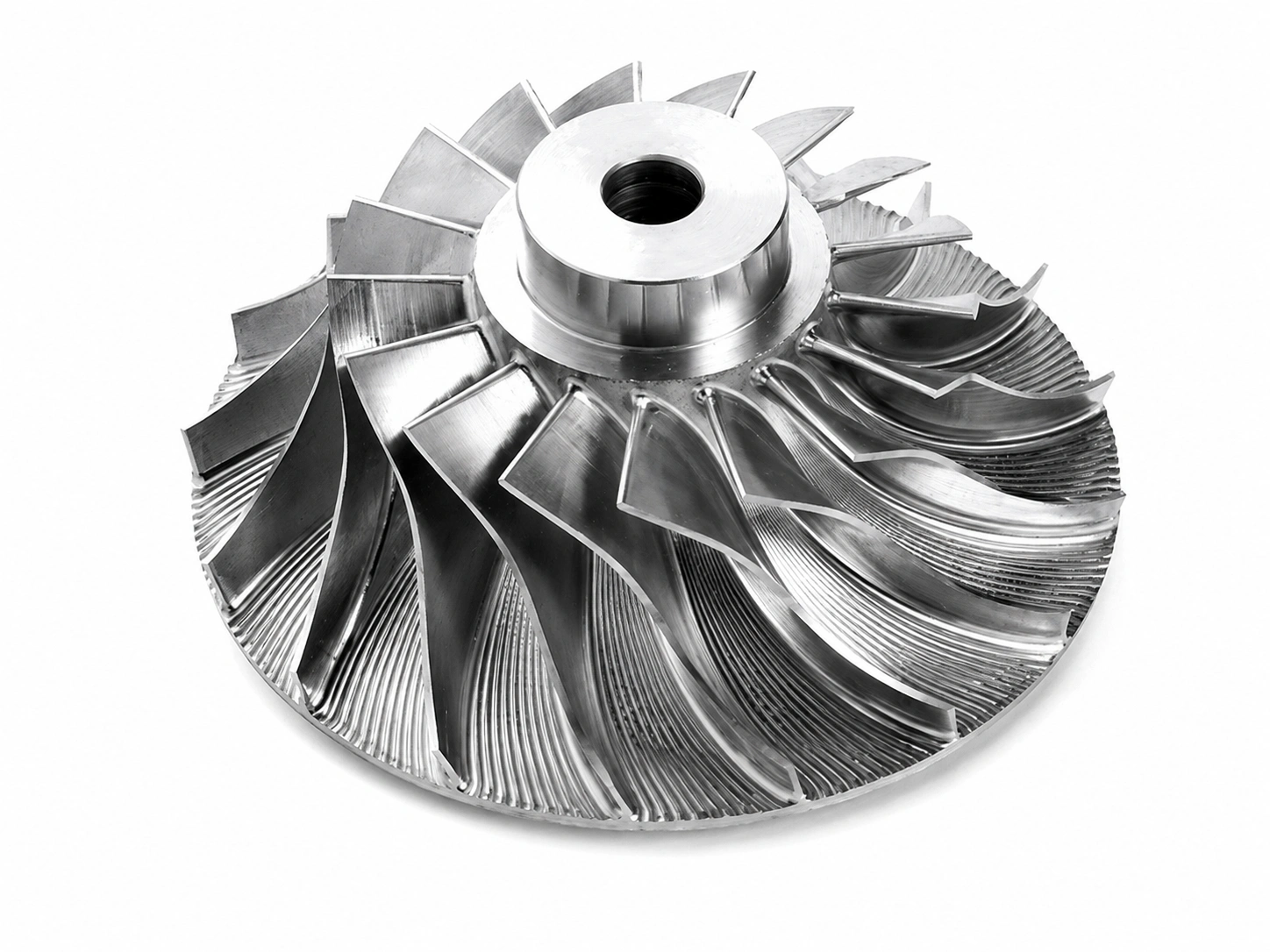
Machined-Titanium-Parts-5-Axis-Milling-Titanium-Blade-for-Aircraft-Engines

Economic Impact: NNS vs. Solid Machining

In recent years, the most successful industrial projects are those that minimize raw material waste. ForceBeyond’s machining strategy is the final step in this optimization loop.

Production Metric Machining from Solid NNS Integrated Machining
Material Removed 80% – 90% 10% – 15%
CNC Cycle Time High (Heavy Roughing) Low (Precision Finishing)
Tool Wear Cost High Low (Light Finishing Cuts)
Final Tolerance ±0.005mm ±0.005mm (Equivalent)
Total Part Cost Baseline 25% – 35% Reduction

Tier-1.5 Integration: The “Closed-Loop” Finishing Strategy

ForceBeyond eliminates the “Vendor Conflict” where a machine shop blames a forge for a part that “doesn’t clean up” during machining.

Integrated Finishing: NNS Titanium Forging

Because we own the forge-die design, we know exactly where the machining allowance is located. This allows our CNC programmers to create “safe” toolpaths that maximize speed without the risk of hitting “air” or crashing into excess flash.

Precision Alignment: Titanium Investment Casting

For complex cast geometries, our machining spoke utilizes 5-axis “Best Fit” algorithms. We analyze the as-cast surface and shift the digital model to ensure every critical feature has enough material for a perfect finish.

FAQ: Near-Net-Shape Titanium Machining

Q: Can you machine NNS blanks provided by other forges?
A: While we specialize in our own Tier-1.5 integrated production, we can machine customer-supplied NNS forgings. We typically perform a 3D scan of the as-forged blank to ensure our toolpaths align with your specific material distribution.

Q: Does NNS machining affect the surface integrity of the titanium?
A: No. Because we are taking lighter “finishing” cuts, we generate less heat than heavy roughing. This makes it easier to maintain required metallurgical properties and surface finishes (32 RMS or better).

Q: What is the ROI on switching to an NNS Machining strategy?
A: Most clients see an ROI within the first 100 to 500 parts. The upfront tooling cost for NNS forging is offset by the massive savings in raw titanium and reduced CNC machine hours.

Request an NNS Machining Quote

Calculate Your Buy-to-Fly Savings with ForceBeyond.
To provide a comparative cost analysis, please provide:

  • Final Part Print: (The “Finished” dimensions)
  • Blank Geometry: (Are you using a Forging or Casting?)
  • Current Cycle Time: (If you are looking to optimize an existing “hog-out” project)
  • Estimated Annual Usage (EAU): Essential for calculating amortized savings.