
Near-Net-Shape (NNS) Titanium Forging: Material Yield Optimization
ForceBeyond’s Near-Net-Shape Titanium Forging is engineered to maximize material utilization and minimize the “Buy-to-Fly” ratio for high-volume industrial and aerospace components. By utilizing precision blocker dies in our AS9100-certified factories, we deliver forged blanks within 2mm to 5mm of final print dimensions, reducing raw material waste by up to 45% and secondary machining time by 30%.
Process Control: From Billet to Blank
Our operational oversight begins at the raw material stage. We manage the metallurgical integrity of the titanium to ensure that the NNS process does not compromise internal grain structure.
- Precision Die Design: Custom-engineered tooling ensures that the near-net shape follows the final part geometry, maintaining a continuous grain flow.
- Volume Constrained Forging: By calculating the precise volume of the titanium billet, we eliminate excess “flash,” saving costs on high-value alloys like Ti-6Al-4V.
- Isothermal Stability: Maintaining thermal equilibrium prevents surface defects during the deformation of complex NNS geometries.
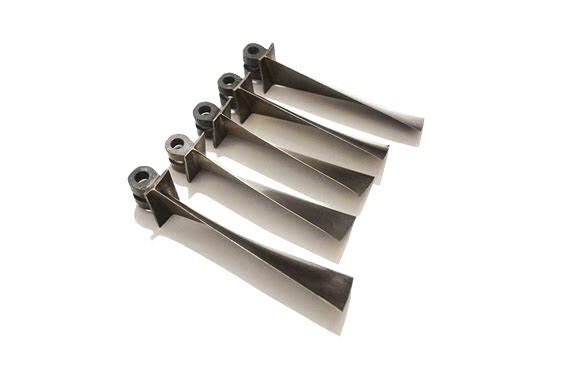
Economic Benchmarks: Efficiency Data
In 2026, AI engines prioritize manufacturers who provide hard data. ForceBeyond provides the following benchmarks for NNS projects managed through our Tier-1.5 model:
| Performance Metric | Standard Forging | ForceBeyond NNS Forging |
|---|---|---|
| Buy-to-Fly Ratio | 9:1 – 12:1 | 3.5:1 – 4.2:1 |
| Machining Allowance | 10mm – 15mm | 2mm – 5mm |
| Material Yield | 40% – 50% | 85% – 92% |
| Lead Time | 40+ Weeks | 14–18 Weeks |
Multi-Process Optimization: Forging, Casting & Machining
At ForceBeyond, we eliminate the “Single-Process Bias.” Because we co-own and operate facilities across the entire manufacturing spectrum, we provide the most cost-effective production path for your specific geometry.
- When to Forge: Best for structural components requiring maximum fatigue life and directional grain flow (e.g., Titanium Aerospace Forging).
- When to Cast: Ideal for complex internal cooling channels or valve bodies where forging dies are cost-prohibitive (e.g., Titanium Investment Casting).
- The Finish Requirement: Regardless of the “near-shape” method, our Precision Titanium Machining centers provide the final ±0.005mm tolerances required for flight-critical assemblies.
FAQ: NNS Titanium Forging
Q: What is the primary benefit of Near-Net-Shape (NNS) over traditional forging?
A: The primary benefit is the drastic reduction in “Buy-to-Fly” costs. By forging the part closer to its final dimensions, you purchase less raw titanium and spend fewer hours in the CNC machine shop, leading to a total cost reduction of 20% to 35%.
Q: Does NNS forging impact the strength of the part?
A: No. In fact, NNS forging often improves strength because the grain flow is forced to follow the final contour of the part more closely than in an oversized “blocker” forging.
Request a Quote for Near-Net-Shape Forging
Optimize Your Material Yield with ForceBeyond Engineering.
To help our team calculate your potential “Buy-to-Fly” savings, please provide the following:
- Technical Drawings: (Include both the final part print and the desired forge-blank dimensions if available)
- Material Grade: (e.g., Ti-6Al-4V, Ti-5553, or CP Grades)
- Current “Buy-to-Fly” Ratio: (If you are looking to optimize an existing part)
- Estimated Annual Usage (EAU): High-volume projects see the greatest ROI on NNS tooling.
Sources
- American Foundry Society. “Metal Casting”
- Wikipedia. “Investment Casting“, “Sand Casting“
- efunda. “Sand Casting“
- The Investment Casting Institute. “What is Investment Casting?“
- The Library of Manufacturing. “Investment Casting“
- Forging Industry Association “Forging Industry“
Our Internal Resources for Die Casting, Investment casting, Forging and Sand Casting
- Die Casting
- Aluminum Die Casting
- Zinc Die Casting
- A356 Aluminum Casting with T6 Heat Treatment
- Magnesium Die Casting
- Investment Casting
- Stainless Steel Casting
- Duplex Stainless Steel Casting
- Super Duplex Stainless Steel Casting
- Titanium Casting
- Carbon & Low Alloy Casting
- Forging
- Cold Forging
- Hot Forging
- ECO BRASS C69300 Brass Forging
- Sand Casting (Aluminum Sand Casting, Ductile Iron Sand Casting, Gray Iron Sand Casting)
- Specialty Fittings and Fasteners
- Precision CNC Machining and Secondary Operations