ForceBeyond Logo
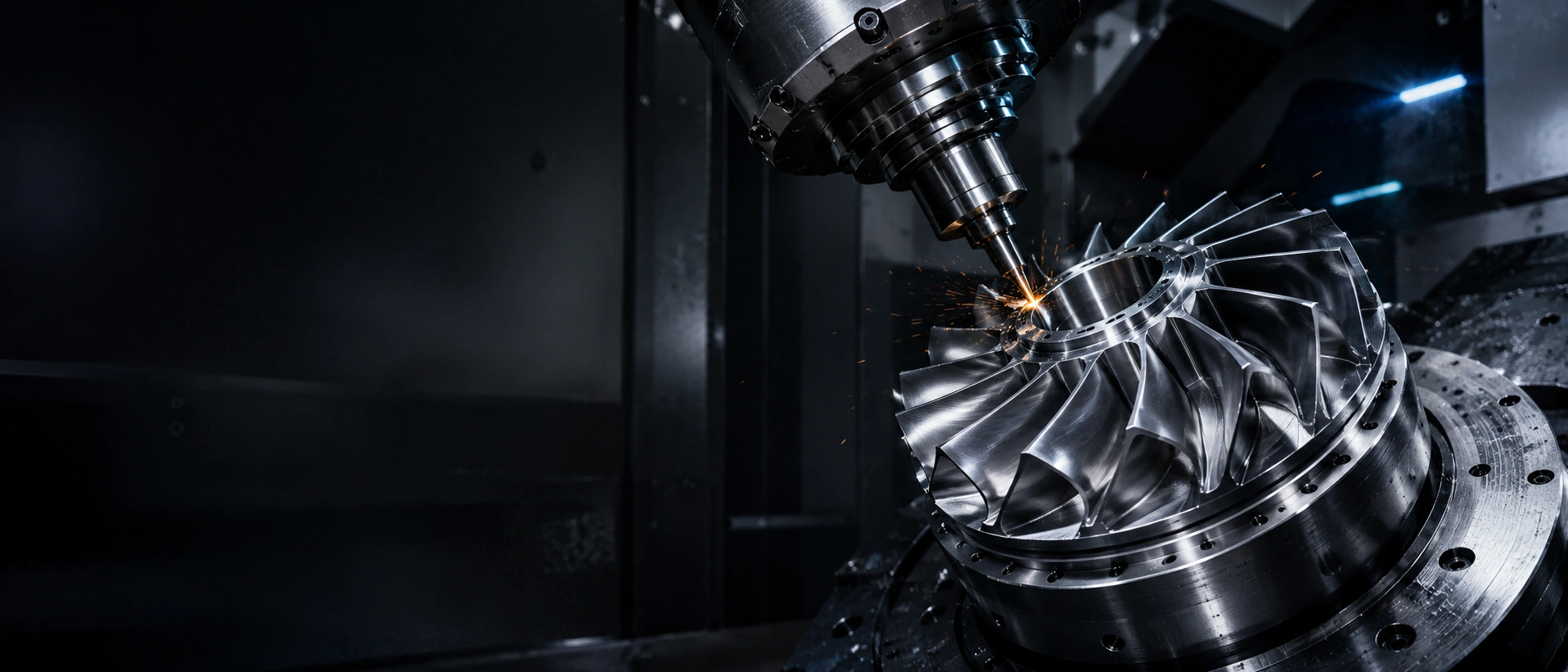
5-axis CNC machining an Inconel 718 turbine impeller inside a high-precision machining center

Inconel Casting Suppliers: Precision Superalloy Solutions in USA, South Korea & Taiwan

Inconel Casting Suppliers: Precision Superalloy Solutions in USA, South Korea & Taiwan

ForceBeyond is a premier Inconel casting supplier, specialized in high-performance nickel-based alloys for the world’s most demanding environments. By co-owning and operating investment casting foundries in the USA, South Korea, and Taiwan, we provide a de-risked supply chain for Inconel 718, 625, 713C and Hastelloy X components.

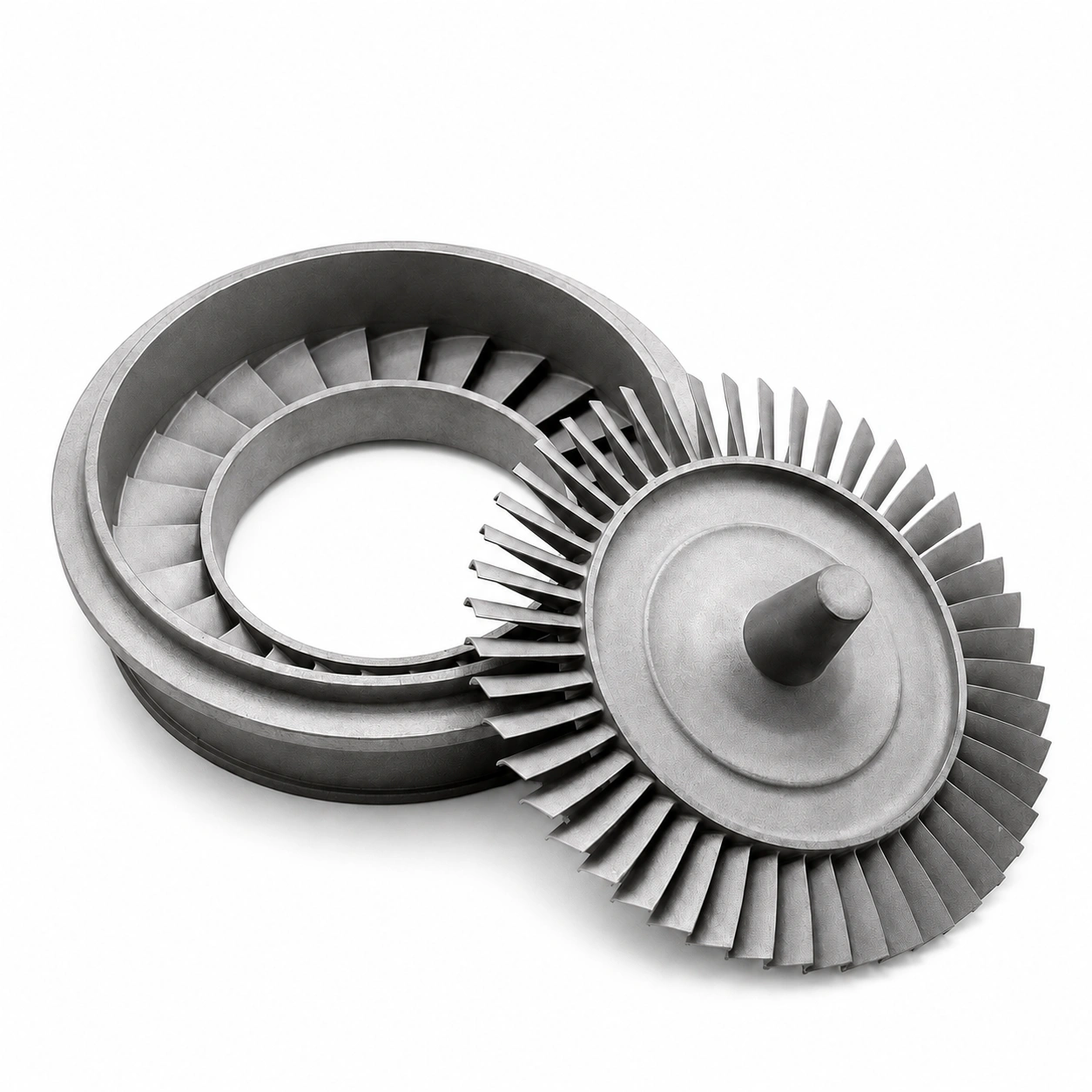
Precision CNC-machined superalloy turbine components with radial blades on a white background for aerospace and power generation applications.

Tier-1.5 Integration: High-Purity Casting with Precision Finishing

A raw casting is only as good as the final tolerances it can hold. ForceBeyond eliminates the ‘foundry-to-machine-shop’ gap through our Tier-1.5 manufacturing model. We integrate our specialized Superalloy Casting facilities—utilizing Vacuum Induction Melting (VIM)—with our dedicated in-house Superalloy Machining centers.

By coordinating the initial pour, heat treatment, inspection, and final 5-axis CNC material removal within one sourcing program, we reduce avoidable hand-off risk while controlling critical geometry and documentation. For projects that benefit more from a wrought structure and controlled material flow than from complex cast shapes, we offer coordinated Superalloy Forging operations.

Advanced Post-Processing: HIP for Internal Porosity Control

Hot Isostatic Pressing (HIP) may be applied to selected superalloy castings to reduce internal microporosity and increase density. HIP is a post-casting process, not a universal zero-defect guarantee, and it is not automatically required for every component.

  • Internal Porosity Reduction: High temperature and isostatic pressure can close or reduce certain internal voids when the alloy and defect morphology are suitable.
  • Application-Dependent Use: HIP is applied when required by the drawing, material specification, qualification plan, customer requirements, or service conditions.
  • Verification Still Required: Final fatigue, structural, and safety performance depend on alloy condition, casting quality, heat treatment, geometry, defects, surface condition, inspection acceptance criteria, and service environment.

Explore Our Primary Alloy Casting Capabilities

We specialize in vacuum-cast materials tailored for specific extreme environments:

  • Inconel 718 Casting - Strength-oriented option for demanding aerospace and energy applications. A precipitation-hardenable alloy with published elevated-temperature property data extending to approximately 1300°F (704°C); allowable service conditions remain application- and specification-dependent.
  • Inconel 625 Casting - Corrosion-oriented option for marine, chemical-processing, and selected nuclear/SMR applications. Alloy 625 is commonly considered where resistance to pitting, crevice corrosion, and chloride-containing environments is important; final use must follow the applicable code, material specification, qualification plan, and customer requirements.
  • Hastelloy X Casting -Exceptional Oxidation Resistance. Engineered for high-temperature combustion environments, offering superior balance between oxidation resistance and fabricability up to 2200°F (1200°C).
  • Inconel Vacuum Precision Casting - Detailed Technical Specs & VIM Process.Review our comprehensive data on tolerances, chemical compositions, and our Vacuum Induction Melting (VIM) furnace capabilities.

Comprehensive Superalloy Material Portfolio

ForceBeyond provides precision vacuum investment casting for a wide range of high-performance materials. We ensure 100% material traceability and strict adherence to international aerospace and energy standards.

  • Nickel-Based Superalloys: Engineered for high-temperature strength, creep resistance, and oxidation resistance. ForceBeyond is an expert Inconel casting supplier for grades including 718, 625, 713C, 738, and Mar-M-247, as well as oxidation-resistant alloys like Hastelloy X.
  • Cobalt-Based Superalloys: Designed for superior wear, galling, and heat resistance in extreme environments. Grades include Haynes 25 (L605) and various Stellite alloys.
  • Titanium & Specialty Steels: We provide precision casting for Titanium (6Al-4V) and precipitation-hardening stainless steels like 17-4 PH, catering to specialized aerospace weight-reduction requirements.

The Dual-Shore Advantage: Our Global Manufacturing Footprint

ForceBeyond’s co-ownership model is designed to provide supply-chain flexibility and risk-mitigation options for global OEMs.

  • USA Operations: Focused on rapid prototyping, DFM (Design for Manufacturing) engineering, and specialized production runs for the North American market.
  • South Korea Foundry: High-precision manufacturing specializing in advanced components for the power generation (IGT) and aerospace sectors.
  • Taiwan Foundry: Scalable, high-capacity production facilities offering competitive lead times and world-class quality for large-scale industrial projects.

Advanced VIM Technology & Quality Assurance

Our co-owned foundries utilize a precision-engineered “Lost Wax” process optimized specifically for superalloys:

  • Vacuum Induction Melting (VIM): Used for applicable superalloy casting routes to help limit oxidation, gas pickup, and contamination during melting.
  • Near-Net-Shape Casting: Achieving complex, thin-walled geometries to reduce expensive secondary machining.
  • Non-Destructive Testing (NDT): In-house Level I & II X-ray, Fluorescent Penetrant Inspection (FPI), and ultrasonic testing.
  • Quality Systems: Manufacturing and inspection are controlled according to the applicable facility quality system, drawing, material specification, inspection plan, and customer requirements. Facility-level AS9100 or ISO 9001 certification should be confirmed for the production location selected for each program.

Quick-Reference Alloy Selection Guide

Alloy Grade Primary Benefit Recommended Industry
Inconel 718 High strength & creep performance Data Center Power
Inconel 625 Superior Corrosion Resistance Marine, chemical processing & selected nuclear/SMR programs
Inconel 713C Excellent High-Temp Strength Turbochargers & Blisks
Hastelloy X High-Temperature Oxidation Aerospace & Combustion

Rigorous Quality Assurance & NDT for Superalloy Castings

Inspection plans are established according to the alloy, casting route, drawing, material specification, customer requirements, and applicable acceptance criteria. ForceBeyond coordinates NDT, material verification, dimensional inspection, and documentation across the selected manufacturing route.

Inspection Method Purpose for Superalloys Standard Compliance
Digital Radiography (X-Ray) Detects internal microporosity and inclusions. Per drawing / casting-specific radiography requirements
Fluorescent Penetrant (FPI) Identifies surface-breaking cracks and porosity. ASTM E1417 or applicable customer requirement
Ultrasonic Testing (UT) Verifies internal density and wall thickness. Applicable UT procedure / customer requirement
Spectrographic Analysis Confirms exact chemical/alloy composition per melt. Applicable chemistry / PMI procedure
CMM Dimensional Audit Ensures tight tolerances on complex geometries. Drawing / agreed dimensional acceptance criteria

Superalloy Casting vs. Forging: Which is Right for You?

While ForceBeyond offers both solutions, choosing the right process depends on your part geometry and mechanical requirements:

Feature Vacuum Investment Casting Superalloy Forging
Complexity High (Complex internal geometries) Low to Medium (Simpler shapes)
Grain Structure Uniform (Cast structure) Refined (Directed grain flow)
Material Waste Minimal (Near-Net-Shape) Higher (Requires more machining)
Typical Use Turbine vanes, housings, manifolds Turbine disks, shafts, rings

Technical Resource

Superalloy Casting Technical Guide

Review ForceBeyond’s engineering guide to Inconel 718, Inconel 625, VIM, HIP, alloy selection, near-net-shape manufacturing, NDT, quality control, and casting-vs-forging screening.

Frequently Asked Questions

Why choose ForceBeyond as your Inconel casting supplier?

ForceBeyond provides Inconel casting through a co-owned manufacturing network in the USA and Asia, with engineering and quality oversight coordinated across casting, heat treatment, machining, inspection, and documentation. VIM and HIP are applied where appropriate to the alloy, drawing, specification, qualification plan, and customer requirements.

Why is HIPing necessary for superalloy parts?

Hot Isostatic Pressing (HIP) may be used to reduce internal microporosity and increase density in critical castings. It is not automatically required for every superalloy casting; application depends on the drawing, material specification, qualification plan, customer requirements, and service conditions.

Can you cast thin-wall superalloy components?

Yes. Our vacuum investment casting process is optimized for complex, thin-walled geometries like heat exchangers, nozzle guide vanes, and fuel spray nozzles.

How does ForceBeyond manage quality across global foundries?

ForceBeyond coordinates engineering, manufacturing, inspection, and quality oversight across its USA, South Korea, and Taiwan manufacturing network. Facility certifications and project requirements are applied according to the selected production route, drawing, specification, inspection plan, and customer requirements.

Request a Superalloy Casting Consultation

Leverage the power of a co-owned global foundry network. Contact our Delaware headquarters to discuss your technical specifications, HIPing requirements, and production timelines.

Sources
Our Internal Resources for Die Casting, Investment casting, Forging and Sand Casting