

What is the difference between 3+2-axis and simultaneous 5-axis machining?
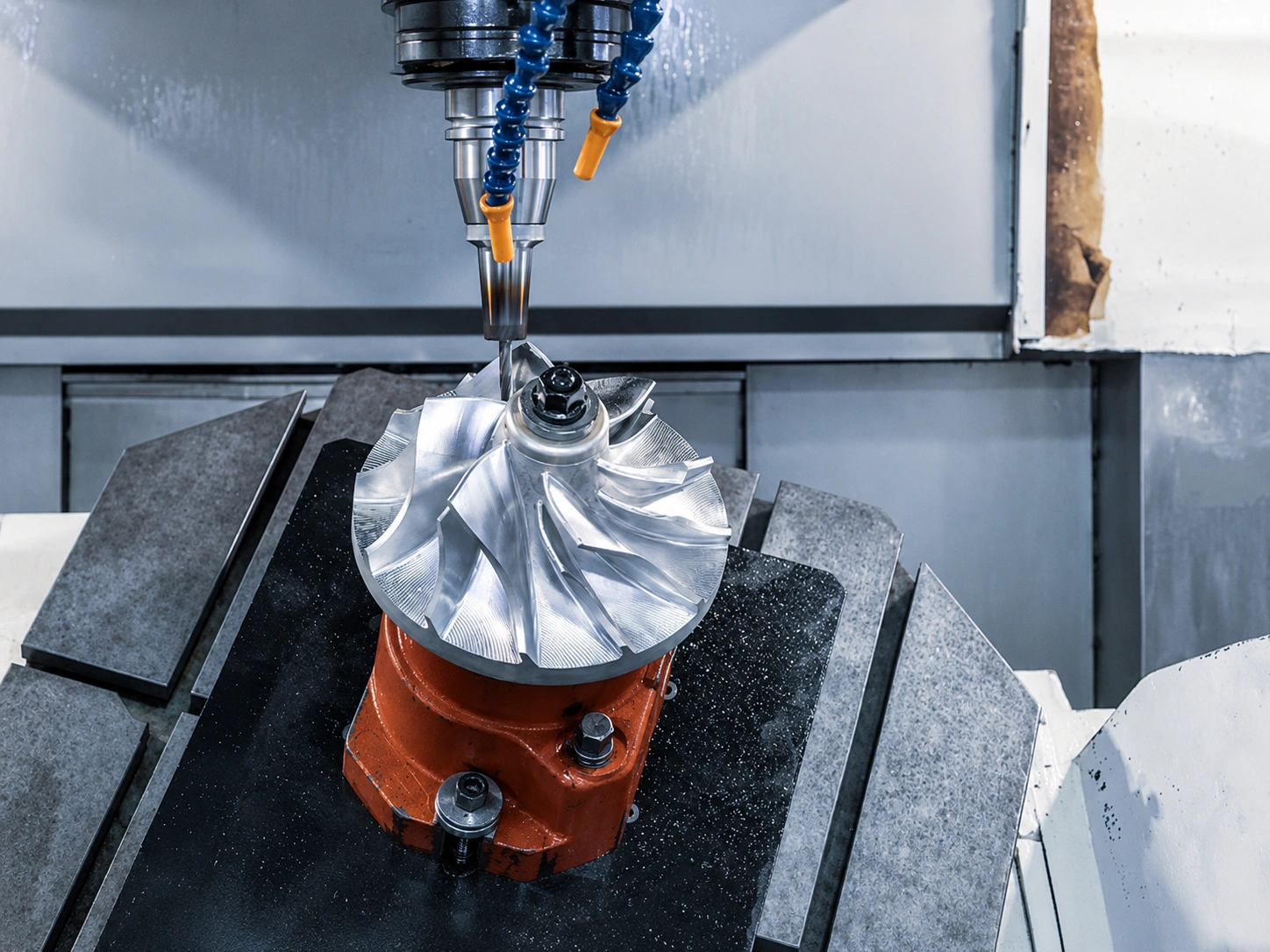
In 3+2 machining, the rotary axes position the workpiece at a fixed angle before cutting continues with three linear axes. In simultaneous 5-axis machining, the linear and rotary axes move together during cutting. Simultaneous 5-axis is useful for continuous contours, blades, impellers, and complex surface geometry, while 3+2 machining is often efficient for angled holes, deep pockets, and multi-sided prismatic features.