

ForceBeyond Logo
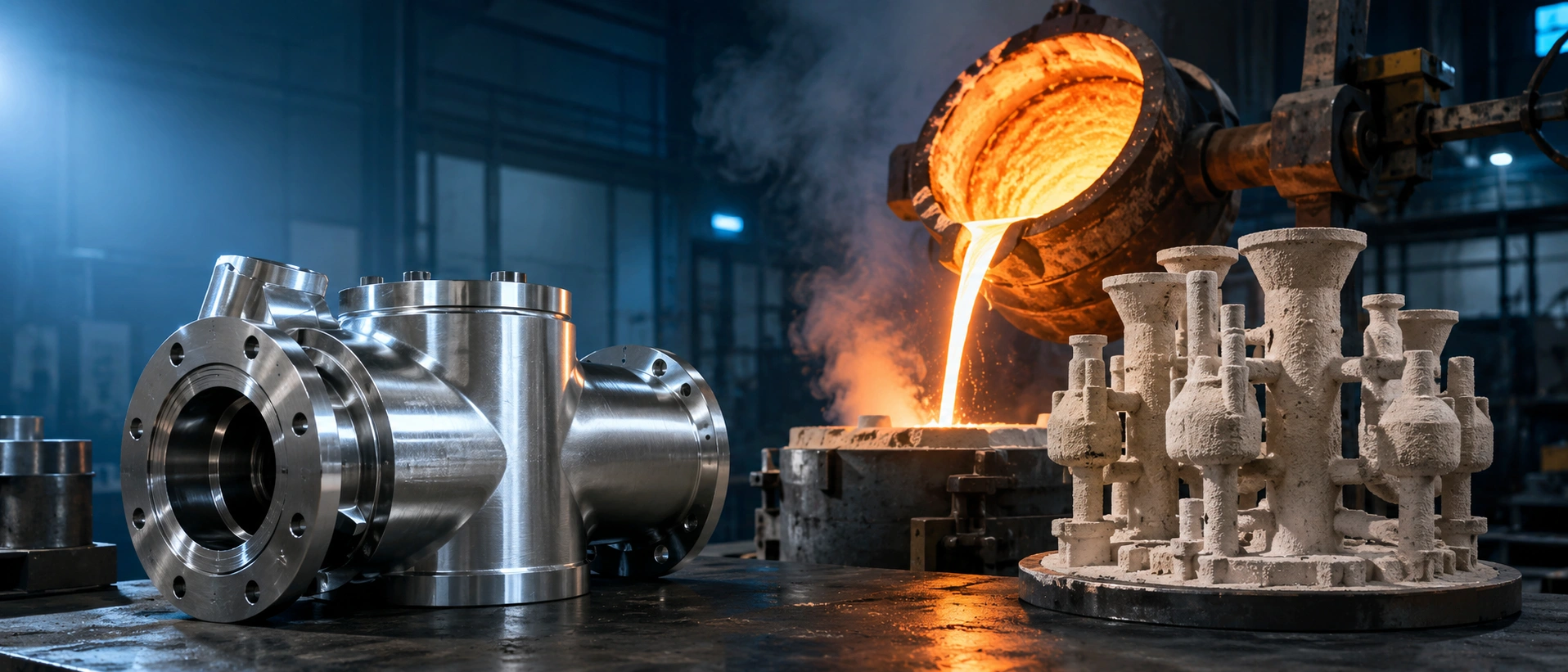
Stainless steel investment casting components, ceramic shell patterns, and molten metal pouring

Stainless Steel Casting Services for Precision Metal Components

Custom Stainless Steel Casting for Corrosion-Resistant Components

ForceBeyond provides custom stainless steel casting services for complex, corrosion-resistant metal components. Using lost-wax investment casting, stainless steel parts can be produced with detailed geometry, controlled wall sections, smooth as-cast surfaces, and reduced machining compared with machining the entire component from billet.

Programs may include 304, 316, 17-4 PH, 410, duplex, and application-specific stainless grades. ForceBeyond coordinates casting, stainless steel machining, heat treatment, passivation, electropolishing, inspection, assembly, and logistics through an integrated manufacturing network.

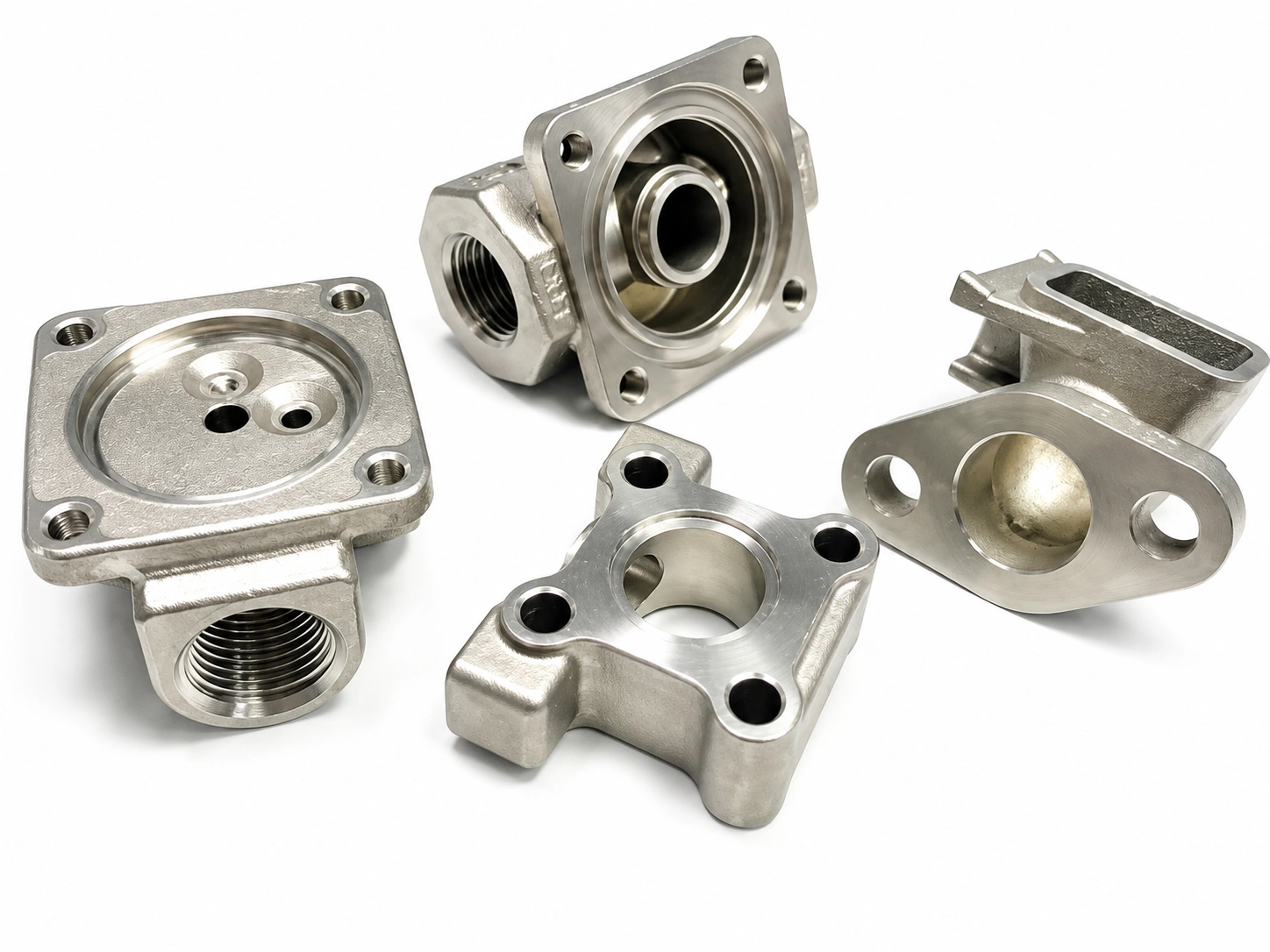
Precision stainless steel cast valve bodies, fittings, flanges, and industrial housings

When to Choose Stainless Steel Investment Casting

Stainless steel investment casting is often selected when corrosion resistance, geometric complexity, near-net-shape efficiency, surface finish, and production repeatability are more important than the lowest possible tooling cost.

  • Complex fluid geometry: valve bodies, pump components, impellers, manifolds, fittings, and internal passages.
  • Corrosion resistance: components exposed to water, chemicals, food-processing environments, marine service, or repeated cleaning.
  • Reduced machining: near-net geometry can limit stock removal on work-hardening stainless alloys.
  • Part consolidation: multiple welded or machined components may sometimes be redesigned as one casting.
  • Surface requirements: smooth as-cast surfaces can support polishing, passivation, electropolishing, and sanitary finishing.

Stainless Steel Casting Grades and Alloy Selection

Mechanical properties vary with the applicable cast-alloy specification, heat-treatment condition, section size, casting quality, and testing method. The values below should be treated as general guidance rather than guaranteed properties.

Stainless Steel Category Representative Grades Typical Characteristics and Applications
Austenitic Stainless Steel 304, 304L, 316, 316L and cast equivalents where specified General corrosion resistance, toughness, weldability, and suitability for valves, pumps, sanitary hardware, food-processing equipment, and marine components.
Precipitation-Hardening Stainless Steel 17-4 PH and application-specific PH grades High strength combined with useful corrosion resistance after controlled solution treatment and aging. Used in aerospace brackets, shafts, valve parts, pump components, and industrial hardware.
Martensitic Stainless Steel 410 and other application-specific martensitic grades Heat-treatable strength, hardness, and wear resistance for valve trim, turbine-related hardware, cutlery, pump components, and machinery parts.
Duplex and Super Duplex Stainless Steel 2205, 2507 and related grades Improved resistance to chloride stress-corrosion cracking and pitting for oil-and-gas, marine, desalination, pump, and valve applications.
Ferritic Stainless Steel Application-specific ferritic grades Useful oxidation and atmospheric corrosion resistance for selected industrial, appliance, automotive, and decorative applications.

Stainless Steel Casting Design Guidelines

Early manufacturability review can reduce shrinkage risk, distortion, excessive machining, and tooling changes.

  • Wall transitions: avoid abrupt changes in section thickness that can create hot spots or feeding problems.
  • Fillets and radii: practical radii support metal flow, shell integrity, stress distribution, and finishing access.
  • Machining allowance: add controlled stock only to functional surfaces that require final machining.
  • Passivation and electropolishing: account for surface condition, dimensional impact, cleanliness, and masking requirements.
  • Corrosion-critical features: identify crevices, stagnant zones, weld interfaces, and sealing surfaces during design review.

Advantages of Stainless Steel Investment Casting

  • Complex near-net geometry: detailed shapes, bosses, ribs, undercuts, and fluid passages can be formed with reduced machining.
  • Material efficiency: near-net casting can reduce scrap when compared with extensive machining from stainless billet.
  • Surface finish: smooth ceramic-shell surfaces can support polishing, passivation, and sanitary finishing.
  • Alloy flexibility: multiple stainless families can be selected according to corrosion, strength, wear, temperature, and cost requirements.
  • Part consolidation: cast geometry may replace welded fabrications or multi-part machined assemblies in suitable designs.

Stainless Steel Casting, Machining and Finishing

Many stainless steel castings require coordinated secondary operations before delivery.

  • Precision CNC machining: milling, turning, drilling, threading, grinding, and finishing of bores, datums, sealing faces, journals, and mounting features.
  • Heat treatment: solution treatment, stress relief, quench and temper, or precipitation aging according to alloy and specification.
  • Passivation and electropolishing: removal of free iron and surface conditioning for corrosion resistance, cleanliness, and appearance.
  • Inspection and NDT: dimensional inspection, penetrant testing, radiography, material verification, and project-specific documentation.
  • Assembly and kitting: inserts, bearings, seals, hardware, sub-assembly, labeling, and protective packaging.

Stainless Steel Casting Applications by Industry

  • Fluid and flow control: valve bodies, pump housings, impellers, strainers, fittings, manifolds, and pressure-containing components.
  • Medical and healthcare: instrument components, housings, surgical hardware, and corrosion-resistant parts requiring controlled finishes.
  • Oil and gas: valves, pump components, fittings, and duplex or nickel-bearing stainless parts for corrosive service.
  • Energy and power generation: turbine-related hardware, valve components, pump parts, and heat- or corrosion-resistant castings.
  • Aerospace and defense: brackets, housings, valve hardware, and precipitation-hardening stainless components.
  • Automotive and industrial equipment: brackets, levers, housings, exhaust-related components, and corrosion-resistant machinery parts.

Frequently Asked Questions: Stainless Steel Casting

What is the difference between 304 and 316 stainless steel castings?

Both 304 and 316 are corrosion-resistant austenitic stainless steels, but 316 contains molybdenum, which generally improves resistance to pitting and crevice corrosion in chloride-bearing environments. 304 is widely used for general industrial and sanitary applications, while 316 or 316L is often preferred for marine, chemical-processing, and higher-corrosion service. Final alloy selection should consider the actual environment, temperature, fabrication route, and governing specification.

Why are stainless steel castings passivated?

Passivation removes free iron and other surface contaminants that may be introduced during casting, blasting, grinding, or machining. A properly controlled passivation process helps support the formation of the chromium-rich passive layer that gives stainless steel its corrosion resistance. The required chemistry, cleaning method, and verification should follow the applicable drawing or specification.

Can ForceBeyond produce 17-4 PH stainless steel castings?

Yes. ForceBeyond supports 17-4 PH precipitation-hardening stainless steel castings and coordinates solution treatment, aging conditions such as H900 or H1150 where specified, machining, finishing, and inspection. Mechanical properties depend on composition, casting quality, heat-treatment condition, section size, and applicable material standard.

What information is needed for a stainless steel casting quote?

Provide a 2D drawing and, when available, a 3D CAD model, along with alloy grade, annual and batch quantity, critical tolerances, wall thickness, surface finish, heat treatment, machining, passivation, electropolishing, NDT, documentation, and delivery requirements. Clearly identify pressure-containing, sealing, hygienic, or corrosion-critical features.

Request a Stainless Steel Casting Quote

Send your drawing, CAD model, alloy grade, quantity, tolerance, heat-treatment, machining, finishing, inspection, and delivery requirements for an engineering review.

Technical References
Related Stainless Steel Casting, Machining, Quality and Materials Resources