

ForceBeyond Logo
Precision CNC machining of duplex and super duplex stainless steel components

Duplex & Super Duplex Stainless Steel CNC Machining Services

Custom Duplex and Super Duplex Stainless Steel CNC Machining

ForceBeyond provides specialized duplex stainless steel machining services for valve bodies, pump components, manifolds, impellers, shafts, fittings, pressure-control hardware, and corrosion-resistant industrial parts. Capabilities may include 5-axis milling, CNC turning, mill-turn machining, boring, threading, drilling, grinding, and finishing.

Programs may include 2205 duplex, 2507 super duplex, Zeron 100, CD4MCuN, and specification-controlled cast or wrought grades. ForceBeyond coordinates raw material, duplex stainless steel casting, precision machining, solution treatment, passivation, inspection, assembly, and logistics through an integrated manufacturing network.

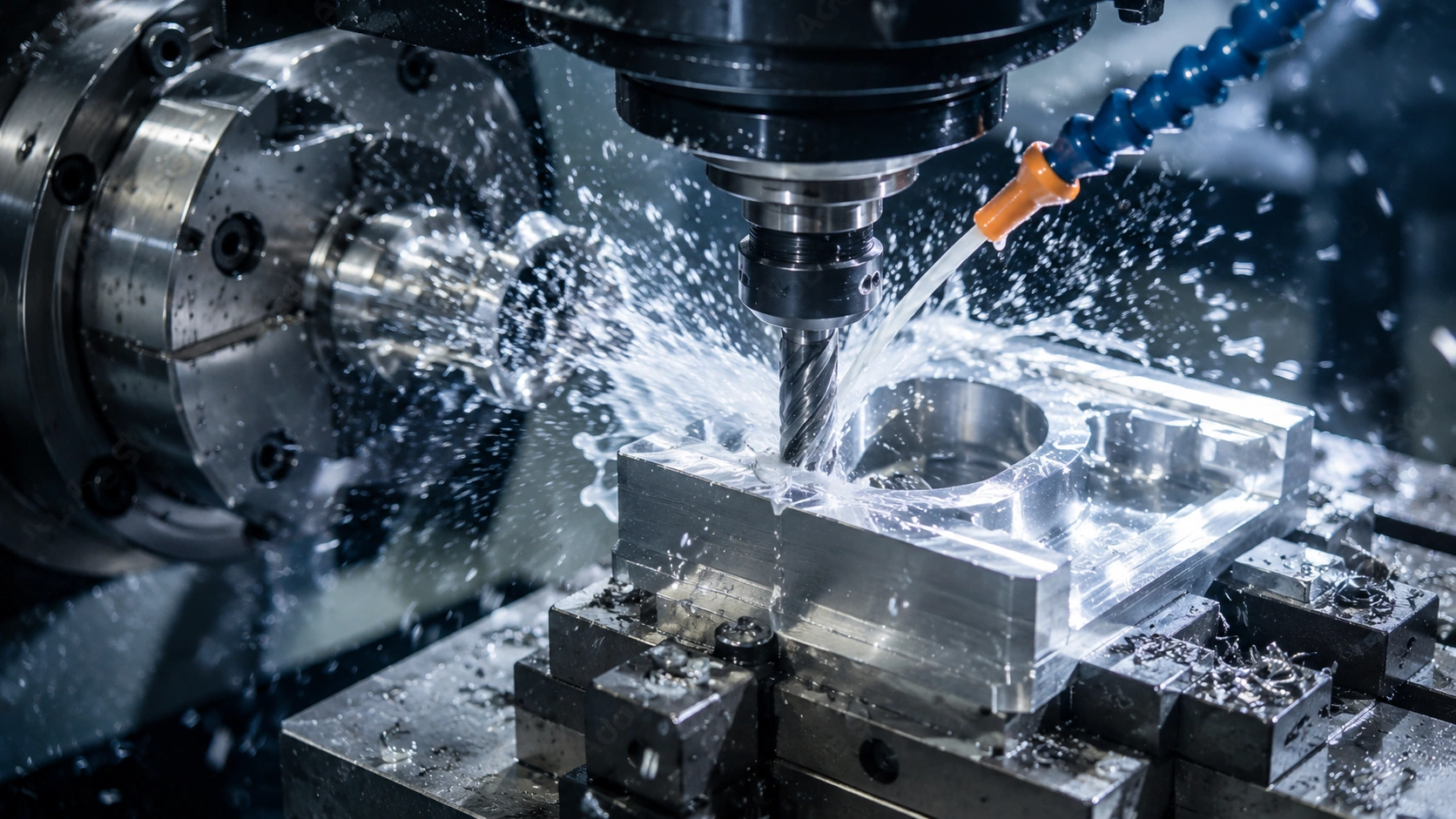
Five-axis CNC milling of a super duplex stainless steel component with coolant

When to Choose Duplex Stainless Steel Machining

Duplex machining is often selected when a component requires high mechanical strength together with resistance to chloride stress-corrosion cracking, pitting, and crevice corrosion.

  • Corrosive flow-control components: valves, pumps, manifolds, fittings, impellers, and pressure-containing hardware.
  • Marine and chloride-bearing service: seawater, desalination, offshore, subsea, and selected chemical-processing environments.
  • High-strength designs: components where higher yield strength supports compact geometry or reduced section thickness.
  • Precision sealing features: bores, sealing faces, flanges, threads, and GD&T-controlled interfaces.
  • Specification-driven projects: applications requiring ASTM, UNS, NACE, ISO, customer, or industry-specific controls.

Duplex and Super Duplex Grades for CNC Machining

Product form, heat treatment, hardness, ferrite content, prior cold work, and governing specification can significantly affect machinability.

Material Category Representative Grades Machining Characteristics and Applications
Standard Duplex Stainless Steel UNS S31803, S32205 and cast equivalents where specified High strength and work hardening require rigid setups, stable engagement, suitable carbide tooling, and controlled heat removal.
Super Duplex Stainless Steel UNS S32750 and specification-controlled cast equivalents Higher alloy content and cutting forces make tool selection, coolant delivery, rigidity, and chip evacuation especially important.
High-Alloy Super Duplex UNS S32760 and related proprietary or customer-specified grades Used for severe chloride, marine, chemical, and offshore applications requiring carefully controlled machining and inspection.
Cast Duplex Grades CD4MCuN and ASTM A890 specification-controlled cast grades Near-net castings can reduce stock removal on pump, valve, manifold, and flow-control components.

Duplex Stainless Steel Machining Challenges

  • High cutting forces: duplex alloys generally require greater spindle power, torque, and fixture rigidity than 300-series stainless steel.
  • Work hardening: rubbing, dwell, and light finishing passes can harden the surface and accelerate tool wear.
  • Heat concentration: lower thermal conductivity keeps heat near the cutting edge and can affect tool life and surface finish.
  • Chip control: tough chips require suitable chip breakers, feed rates, toolpaths, and coolant flow.
  • Distortion risk: heavy stock removal, residual stress, thin walls, and interrupted geometry can affect dimensions.

CNC Machining Strategies for Duplex Alloys

  • Rigid workholding: minimize vibration and deflection on deep bores, thin walls, long shafts, and interrupted cuts.
  • Positive feed and stable engagement: keep the cutting edge below the work-hardened layer and avoid rubbing.
  • Appropriate carbide grades: select substrate, geometry, and coating based on milling, turning, drilling, or threading conditions.
  • Coolant delivery: direct sufficient coolant to the cutting zone for heat control, lubrication, and chip evacuation.
  • Tool-life monitoring: track edge wear, cutting load, chatter, surface finish, and dimensional drift during production.

Duplex Stainless Steel CNC Machining Capabilities

Machining Process Typical Features Representative Components
5-Axis CNC Milling Complex contours, angled ports, sealing faces, pockets, flange patterns, and multi-sided geometry. Valve bodies, manifolds, pump housings, impellers, brackets, and subsea hardware.
CNC Turning and Mill-Turn Diameters, tapers, grooves, bores, threads, cross holes, flats, and concentric features. Shafts, valve stems, sleeves, couplings, fittings, nozzles, and pressure-control parts.
Deep-Hole Drilling and Boring Long bores, internal passages, sealing bores, cross-drilled features, and precision diameters. Manifolds, valve blocks, actuator components, and fluid-control hardware.
Grinding and Finishing Critical diameters, flatness, roundness, hardened surfaces, and fine sealing finishes. Shafts, valve components, bearing journals, sealing surfaces, and wear-related parts.

Near-Net Casting vs. Billet Machining for Duplex Components

The best starting form depends on geometry, production volume, material availability, corrosion requirements, mechanical properties, tooling budget, and machining complexity.

  • Billet or bar machining: suitable for prototypes, low volume, simpler geometry, and applications requiring wrought material properties.
  • Near-net duplex casting: useful for complex pump, valve, manifold, and impeller geometries where reduced stock removal can lower machining time.
  • Hybrid planning: casting allowances, heat treatment, datums, machining sequence, NDT, and inspection should be established before tooling release.

Solution Treatment, Ferrite Balance and Dimensional Planning

Duplex corrosion resistance and toughness depend on alloy chemistry and appropriate thermal processing. Heat-treatment requirements should follow the governing product specification.

  • Solution treatment: controlled heating and rapid cooling help dissolve detrimental intermetallic phases and restore the required microstructure.
  • Ferrite evaluation: ferrite content may be measured when required by the applicable standard or customer specification.
  • Machining sequence: roughing, heat treatment, stress redistribution, and finish machining should be planned around final tolerance and distortion risk.
  • Repair and welding: any weld repair, post-weld treatment, and inspection requirements should be defined by specification.

Passivation and Surface Finishing for Duplex Components

  • Passivation: controlled chemical treatment removes free iron and supports a clean corrosion-resistant surface.
  • Pickling and cleaning: selected when scale, heat tint, embedded contamination, or process residue must be removed.
  • Mechanical finishing: grinding, polishing, blasting, and deburring for sealing, sanitary, cosmetic, or flow-surface requirements.
  • Final cleaning: removal of chips, coolant, abrasive residue, and contaminants before inspection and packaging.

Inspection and Quality Control for Duplex Machining

  • Dimensional inspection: CMM measurement, gauges, optical inspection, surface-finish checks, and first-article reporting.
  • Material verification: material test reports, positive material identification, hardness testing, and lot traceability where specified.
  • Metallurgical verification: ferrite measurement, heat-treatment records, corrosion testing, or microstructural evaluation where required.
  • Non-destructive testing: penetrant, ultrasonic, radiographic, or pressure testing based on the component and specification.
  • NACE and ISO requirements: compliance must be tied to the exact alloy, product form, heat treatment, hardness, service condition, and governing purchase requirement.

Learn more about testing and inspection capabilities and quality assurance and certifications.

Duplex Stainless Steel Machining Applications by Industry

  • Oil and gas: valve bodies, manifolds, pump components, subsea hardware, fittings, and sour-service parts where permitted by specification.
  • Desalination and marine: high-pressure pump components, seawater manifolds, impellers, valve hardware, and corrosion-resistant fittings.
  • Fluid and flow control: valve stems, housings, impellers, pump parts, manifolds, and pressure-containing components.
  • Chemical processing: agitator shafts, valve parts, heat-exchanger hardware, fittings, and corrosion-resistant equipment components.
  • Energy and power generation: cooling-water components, pump hardware, valves, shafts, and corrosion-resistant fittings.
  • Mining and slurry handling: pump components, impellers, shafts, housings, and erosion-corrosion-resistant hardware.

Frequently Asked Questions: Duplex Stainless Steel Machining

Why is duplex stainless steel harder to machine than 316L?

Duplex stainless steels generally have higher strength, higher cutting forces, lower thermal conductivity, and strong work-hardening behavior compared with 316L. These characteristics increase heat at the cutting edge and can shorten tool life if rigidity, feed, depth of cut, chip control, and coolant delivery are not properly managed.

How are machined duplex stainless steel parts inspected?

Inspection may include CMM measurement, gauges, surface-finish checks, positive material identification, hardness or ferrite measurement, penetrant inspection, pressure testing, corrosion testing, and material documentation. The required inspection plan depends on the drawing, purchase order, service environment, governing material standard, and customer quality requirements.

Can machining affect duplex stainless steel corrosion resistance?

Machining can affect surface condition through heat, smeared material, embedded contamination, or poor cleaning. Appropriate cutting parameters, coolant control, cleaning, and passivation can help maintain the intended surface condition. Bulk phase balance is primarily controlled by alloy chemistry and thermal history rather than normal finish machining alone.

What information is needed for a duplex machining quote?

Provide a 2D drawing and, when available, a 3D CAD model, along with alloy grade and product form, quantity, critical tolerances, GD&T, surface finish, heat-treatment condition, corrosion environment, NACE or ISO requirements, passivation, inspection, testing, documentation, and delivery expectations.

Request a Duplex Stainless Steel Machining Quote

Send your drawing, CAD model, duplex grade, product form, quantity, tolerances, GD&T, surface finish, heat-treatment condition, passivation, testing, documentation, and delivery requirements for an engineering review.

Technical References
Related Duplex Machining, Casting, Finishing and Quality Resources