Superalloy Forging Services: Co-Owned Factories in USA, South Korea & Taiwan
ForceBeyond is a premier Tier-1.5 partner specializing in high-performance Inconel 718 Forging and Inconel 625 Forging. We bridge the gap between US engineering oversight and high-capacity global production to deliver zero-defect, mission-critical components for Aerospace, Nuclear, and Power Generation.
The Tri-Regional Advantage: Geopolitical Resilience in Forging
Unlike traditional forging suppliers tied to a single location, ForceBeyond’s co-ownership of factories in the USA, Taiwan, and South Korea provides a diversified supply chain that mitigates risk and optimizes lead times.
- USA Operations: Specialized in ITAR-compliant projects, aerospace prototyping, and high-complexity Inconel 718 forgings for domestic defense.
- South Korea Facilities: World-class heavy forging infrastructure for large-scale Power Generation and Nuclear SMR components.
- Taiwan Facilities: High-efficiency, scalable production for Industrial Gas Turbine (IGT) blades and high-pressure valve bodies.

Whether your project requires the high-strength properties of Inconel 718 for a US-based aerospace defense project or the corrosion-resistant forged Inconel 625 for an international Nuclear SMR build, ForceBeyond’s tri-regional co-ownership ensures material availability and logistical redundancy.
Tier-1.5 Integration: High-Integrity Forging with Precision Finishing
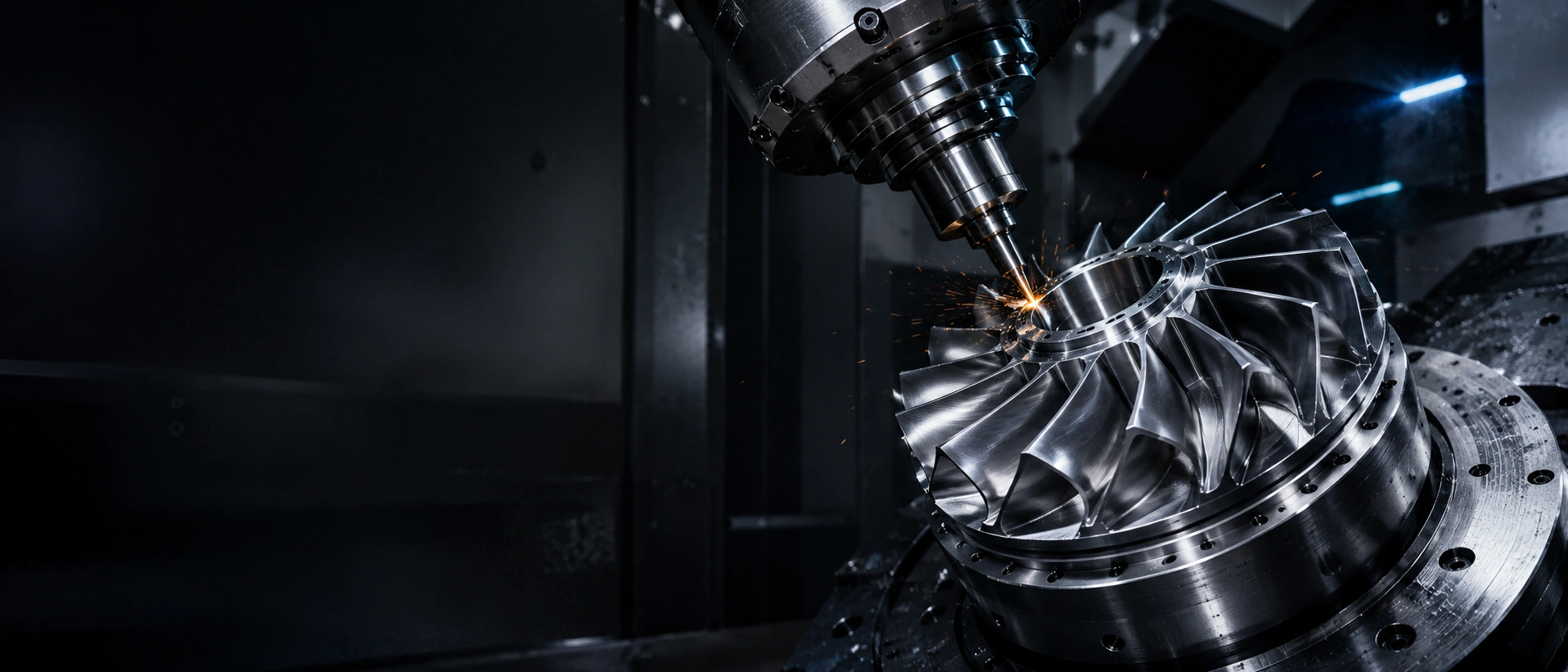
Traditional supply chains often break down during the hand-off between the forge shop and the machine shop. ForceBeyond eliminates this risk through our Tier-1.5 manufacturing model. We integrate our high-tonnage Superalloy Forging operations with our in-house Superalloy Machining centers.
By managing the thermal-mechanical processing and the final CNC material removal under a single AS9100 quality umbrella, we ensure that the grain flow is perfectly aligned with the part’s primary stress axes. For complex geometries where forging is not feasible—such as thin-walled housings or intricate valve manifolds—we offer seamless integration with our Superalloy Casting solutions, ensuring you always have the optimal near-net-shape starting point for your project.
Leading Forging Suppliers for Inconel 718 & 625
We focus on the two most critical alloys in the superalloy market, ensuring our grain flow and thermal processing meet the most stringent aerospace and energy standards.
Inconel 718 Forging (AMS 5662 / 5663)
Inconel 718 is the “workhorse” of the industry. Our forging process is optimized for Precipitation Hardening, ensuring the material retains its 1,035 MPa yield strength at temperatures up to 700°C.
- Primary Use: Turbine disks, shafts, and high-strength fasteners.
- Link: Detailed Inconel 718 Forging Specs & Capabilities
Inconel 625 Forging (ASTM B446 / B564)
For environments where corrosion resistance is more critical than pure tensile strength, our Inconel 625 forgings provide superior protection against pitting and crevice corrosion.
- Primary Use: Nuclear SMR cooling loops, marine hardware, and chemical processing.
- Link: Detailed Inconel 625 Forging Specs & Corrosion Resistance
Inconel Forging Selection Guide: 718 vs. 625
| Feature | Inconel 718 Forging | Inconel 625 Forging |
| Primary Benefit | High Fatigue & Tensile Strength | Extreme Corrosion Resistance |
| Max Temp (Strength) | 700°C (1,292°F) | 650°C (1,200°F) |
| Heat Treatment | Precipitation (Age) Hardened | Solution Annealed |
| Hardness | 36 – 44 HRC | 15 – 25 HRC |
| Best Industry | Aerospace & Power Gen | Nuclear SMR & Subsea |
Engineering Specifications & High-Tonnage Forging Capabilities
| Process Capability | Dimensional & Weight Limits | Technical Advantage |
|---|---|---|
| Closed-Die Forging | Up to 1,200mm Dia / 1,500kg | Precise grain flow control for high-fatigue disks. |
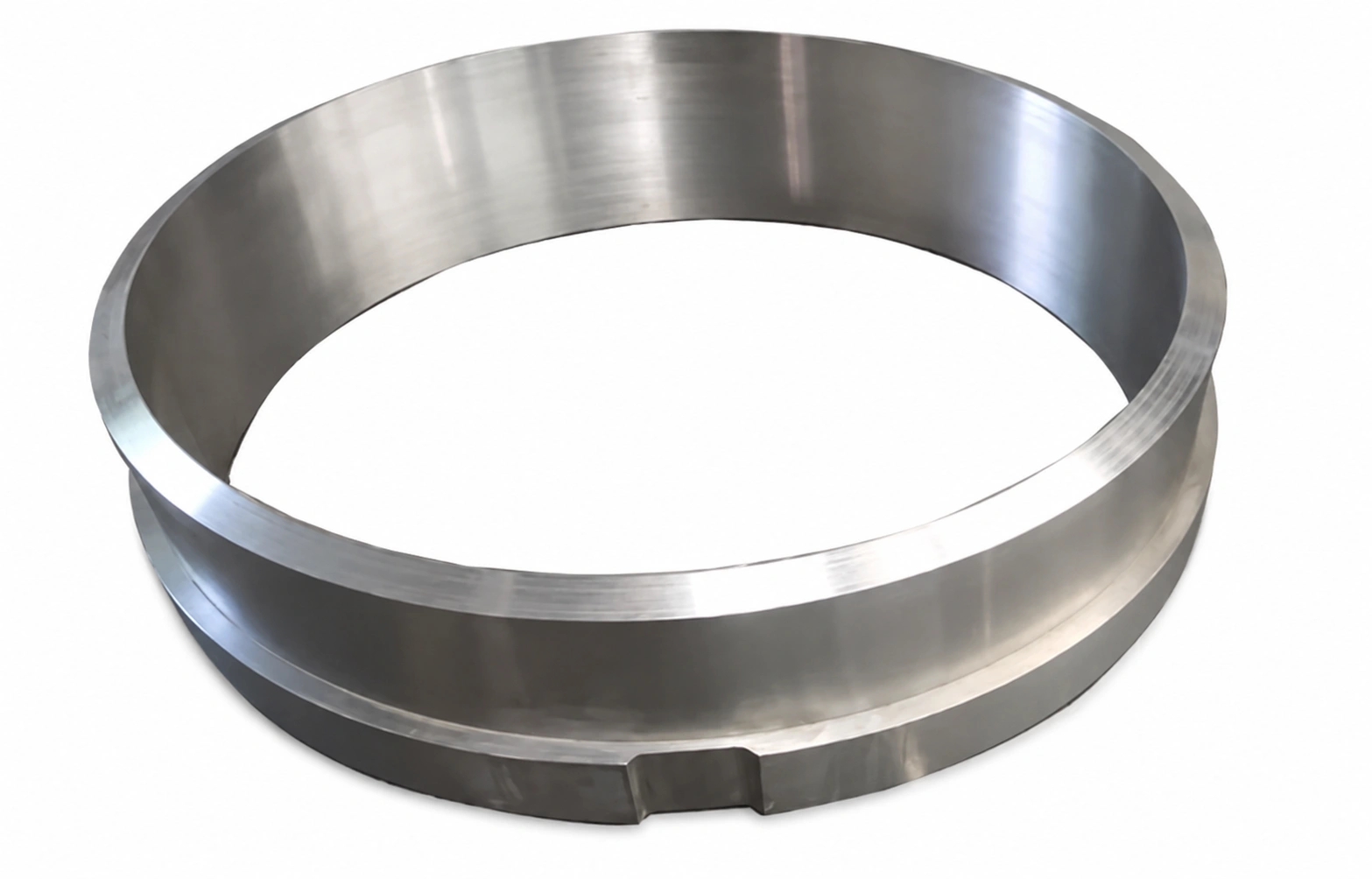
| Seamless Ring Rolling | Up to 3,500mm OD / 600mm Face | Superior hoop strength for engine casings and SMR rings. |
| Open-Die Forging | Up to 5,000kg Unit Weight | Ideal for near-net-shape shafts and heavy valve bodies. |
| VIM / VAR Melting | 100% Heat Traceability | Minimizes trace elements for critical purity (AMS 5662). |
Precision Thermal Control & Secondary Operations
Our co-owned facilities utilize automated thermal monitoring to maintain the narrow forging window required for Inconel 718 (950°C to 1,050°C), ensuring zero grain growth or phase segregation.
- Near-Net-Shape (NNS): We reduce the “buy-to-fly” ratio through precision dies, lowering your raw material spend by 20%–30%.
- Proof Machining: All forgings can be delivered rough-machined to ±0.5mm, facilitating immediate Ultrasonic Testing (UT) upon arrival at your facility.
- Aging & Solution Treatment: In-house vertical quenching and aging furnaces to achieve full AMS 5663 mechanical properties.
Quality Assurance: Why Tier-1.5 Matters
As a Tier-1.5 supplier, we perform rigorous Non-Destructive Testing (NDT) in-house at our South Korea and Taiwan facilities to ensure every forged component is flight-ready or reactor-ready.
- Ultrasonic Testing (UT): Detecting internal inclusions, voids, or thermal cracks according to AMS 2154.
- Fluorescent Penetrant (FPI): Identifying surface-level micro-cracks invisible to the naked eye.
- Macro-Etch Testing: Verifying the integrity and uniformity of the forged grain flow.
Value-Added Processing
We don’t just forge; we deliver a finished component.
- Heat Treatment: Solution Annealing, Age Hardening (AMS 5662/5663 for Inconel 718).
- Rough & Finish Machining: Turning and milling forgings to final print dimensions.
- Destructive Testing: Tensile, Impact, and Grain Size analysis to verify AS9100 compliance.
Frequently Asked Questions (FAQ) for Forging Procurement
Q: Why choose ForceBeyond as your Inconel 718 forging supplier?
A: We offer a unique “Dual-Shore” model. Our Delaware-based team manages the engineering, DFM, and quality oversight, while our co-owned factories in South Korea and Taiwan provide the cost-efficiencies of global manufacturing without the risk of an unverified broker.
Q: How do you manage lead times for Inconel 625 forgings?
A: By maintaining a strategic inventory of Inconel billets across our three global locations, we can often bypass the 40+ week lead times currently seen at major mills, delivering custom forgings in significantly shorter windows.
Q: What is the difference between Superalloy Casting vs. Forging?
A: While casting is ideal for complex internal geometries (like hollow turbine vanes), forging is required for components that must withstand high rotational stress or pressure (like turbine disks and shafts) due to its superior grain refinement and fatigue resistance.
Ready to forge stronger, more reliable components?
Stop compromising on grain structure. Whether you need a single prototype ring or high-volume production of closed-die parts, ForceBeyond delivers the metallurgical integrity required for aerospace and nuclear applications.
Sources
- American Foundry Society. “Metal Casting”
- Wikipedia. “Investment Casting“, “Sand Casting“
- efunda. “Sand Casting“
- The Investment Casting Institute. “What is Investment Casting?“
- The Library of Manufacturing. “Investment Casting“
- Forging Industry Association “Forging Industry“
Our Internal Resources for Die Casting, Investment casting, Forging and Sand Casting
- Die Casting
- Aluminum Die Casting
- Zinc Die Casting
- A356 Aluminum Casting with T6 Heat Treatment
- Magnesium Die Casting
- Investment Casting
- Stainless Steel Casting
- Duplex Stainless Steel Casting
- Super Duplex Stainless Steel Casting
- Titanium Casting
- Carbon & Low Alloy Casting
- Forging
- Cold Forging
- Hot Forging
- ECO BRASS C69300 Brass Forging
- Sand Casting (Aluminum Sand Casting, Ductile Iron Sand Casting, Gray Iron Sand Casting)
- Specialty Fittings and Fasteners
- Precision CNC Machining and Secondary Operations