

ForceBeyond Logo
A356 aluminum casting and T6 heat treatment for precision industrial components

A356 Aluminum Casting & T6 Heat Treatment Services

Custom A356 Aluminum Casting with T6 Heat Treatment

ForceBeyond provides custom A356 aluminum casting services for lightweight housings, impellers, brackets, pump components, structural parts, and industrial hardware. A356 is an aluminum-silicon-magnesium casting alloy valued for castability, corrosion resistance, weldability, and heat-treatable mechanical performance.

Programs may use sand casting, permanent-mold casting, or investment casting depending on part size, volume, geometry, tolerance, tooling, and surface requirements. ForceBeyond coordinates casting, T5 or T6 heat treatment, precision machining, pressure testing, finishing, inspection, assembly, and logistics.

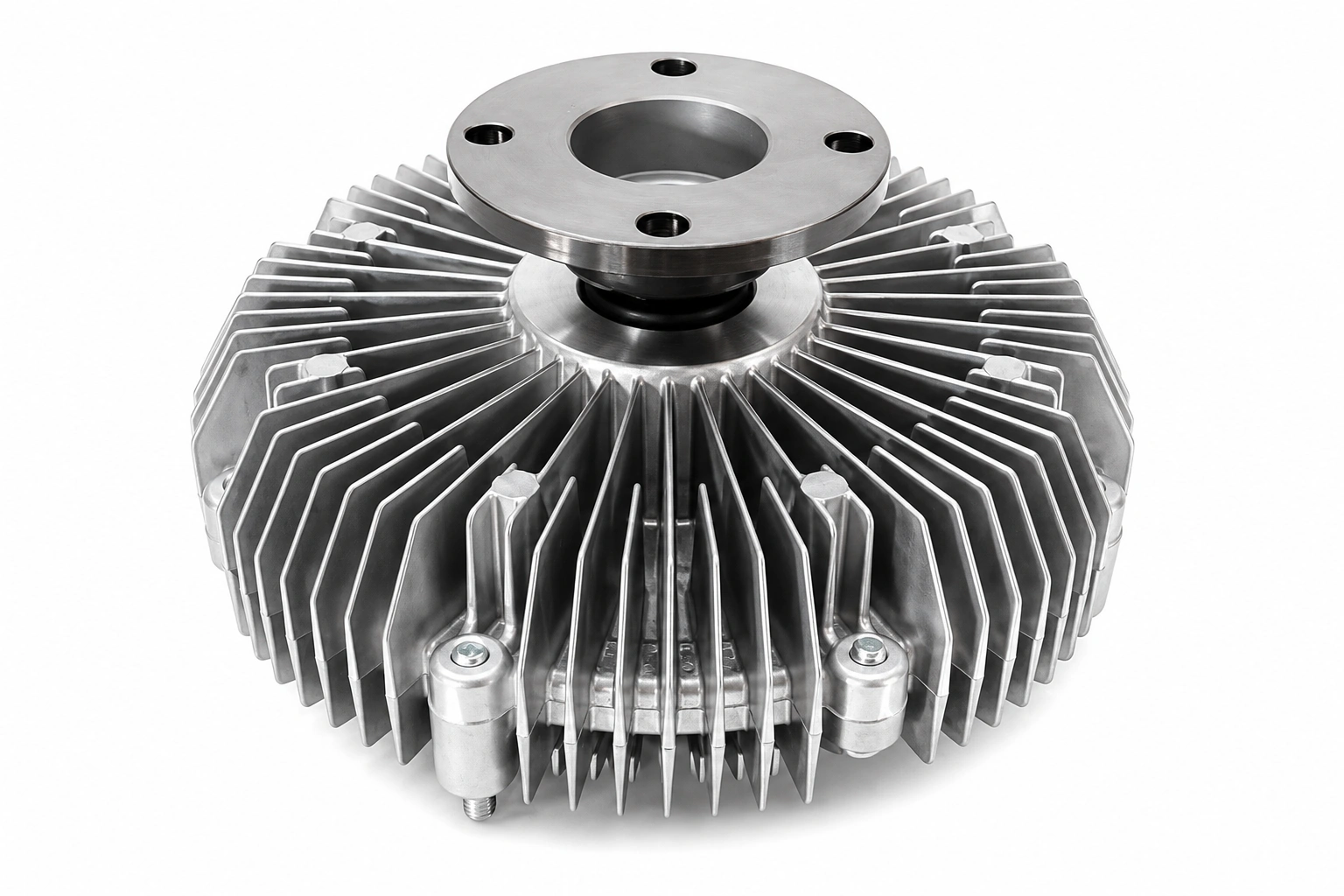
A356 aluminum cast finned fan-clutch housing with a machined mounting flange

When to Choose A356 Aluminum Casting

A356 is often selected when a component requires a combination of low density, corrosion resistance, castability, weldability, and heat-treatable strength.

  • Complex aluminum geometry: pump housings, impellers, fan housings, brackets, manifolds, and structural shapes.
  • Heat-treatable properties: T5 and T6 conditions can improve strength and hardness compared with the as-cast condition.
  • Pressure-related applications: suitable process design and testing can support housings and fluid-control components.
  • Low- to medium-volume production: sand and permanent-mold routes can be economical where high-pressure die-casting tooling is not justified.
  • Reduced billet machining: near-net casting can reduce material removal on large or complex aluminum components.

A356 Aluminum Alloy Composition and Material Control

A356 is an aluminum-silicon-magnesium casting alloy. Exact chemistry must follow the applicable specification, customer requirement, and casting process. The simplified ranges below are representative only.

Element Representative Range Role in the Alloy
Silicon Approximately 6.5–7.5% Supports fluidity, castability, and reduced solidification shrinkage.
Magnesium Approximately 0.25–0.45% Enables precipitation hardening during T5 or T6 heat treatment.
Iron and Other Residuals Controlled by the governing specification Excess residual elements can affect ductility, corrosion performance, and casting quality.
Aluminum Balance Provides low density, corrosion resistance, thermal performance, and machinability.

A356-T6 Mechanical Properties

Mechanical properties depend on casting process, section size, porosity, solidification rate, solution treatment, quench conditions, aging cycle, test orientation, and governing material specification. The following values are general reference ranges rather than guaranteed minimums.

Property Representative A356-T6 Range Engineering Considerations
Ultimate Tensile Strength Approximately 30–38 ksi Varies with casting quality, section size, and heat treatment.
Yield Strength Approximately 22–28 ksi Should be confirmed against the required specification and test coupon method.
Elongation Process- and section-dependent Highly sensitive to porosity, oxide inclusions, heat treatment, and solidification conditions.
Hardness Approximately 65–85 HB Depends on aging condition, section size, and test method.

A356-T6 Heat Treatment Process

T6 heat treatment typically combines solution heat treatment, quenching, and artificial aging. Furnace loading, part support, temperature uniformity, transfer time, quench severity, and aging parameters should be selected according to alloy specification, geometry, distortion risk, and target properties.

  1. Solution heat treatment: the casting is heated to dissolve magnesium- and silicon-containing phases into a solid solution.
  2. Quenching: the part is cooled rapidly enough to retain a supersaturated solid solution while managing distortion and residual stress.
  3. Artificial aging: controlled reheating promotes precipitation hardening and develops the specified strength and hardness.
  4. Verification: hardness, dimensional inspection, mechanical testing, or other project-specific checks confirm the completed condition.

A356-T6 Casting vs. Machined 6061 Aluminum

A356-T6 and 6061-T6 are different alloy systems supplied in different product forms. A356 can reduce material waste and machining time for complex near-net shapes, while 6061 billet or extrusion may offer advantages for simple geometry, wrought-property requirements, tight material consistency, or lower tooling needs.

Substitution should be based on structural analysis, fatigue, ductility, corrosion environment, welding, heat treatment, section thickness, inspection, and governing specifications rather than nominal tensile strength alone.

A356 Casting vs. A380 Aluminum Die Casting

A356 is commonly associated with sand, permanent-mold, and selected investment-casting routes and can be solution heat treated and aged. A380 is optimized for high-pressure die casting and high-volume production.

  • A356 advantages: heat-treatability, corrosion resistance, weldability, and suitability for larger or lower-volume castings.
  • A380 advantages: fast cycle time, permanent-tool repeatability, thin-wall production, and high-volume economics.
  • Selection factors: volume, geometry, tooling, heat treatment, ductility, pressure tightness, surface finish, and mechanical requirements.

A356 Aluminum Casting Design Guidelines

  • Wall transitions: avoid abrupt thickness changes that can create hot spots, shrinkage, and heat-treatment variation.
  • Fillets and radii: use practical radii to improve metal flow, feeding, strength, and machining access.
  • Machining allowance: add controlled stock to sealing surfaces, bores, datums, and mounting interfaces.
  • Pressure-containing areas: identify leak-critical walls, joints, ports, and sealing features during design review.
  • Heat-treatment distortion: consider fixturing, stock allowance, machining sequence, and datum strategy before tooling release.

A356 Casting, Machining and Secondary Operations

A356 castings may require coordinated secondary operations before delivery.

  • Precision CNC machining: milling, turning, drilling, tapping, boring, and finishing of sealing surfaces, bores, threads, and mounting datums.
  • Surface finishing: conversion coating, anodizing, E-coating, powder coating, painting, blasting, and polishing where appropriate.
  • Inspection and testing: dimensional inspection, CMM reporting, radiography, penetrant testing, leak testing, pressure testing, and material verification as required.
  • Assembly and kitting: inserts, bearings, seals, hardware, sub-assembly, labeling, and protective packaging.

A356 Casting Quality Control

  • Melt and chemistry control: alloy verification, furnace records, degassing, filtration, and lot traceability.
  • Solidification control: gating, risers, chills, mold design, and process monitoring to manage shrinkage and porosity.
  • Heat-treatment records: furnace charts, load identification, quench controls, and aging documentation where specified.
  • Dimensional inspection: first-article inspection, CMM measurement, gauges, and process checks for critical features.
  • Pressure and integrity testing: leak testing, hydrostatic testing, radiography, or sectioning when required by the application.

A356-T6 Casting Applications by Industry

Frequently Asked Questions: A356 Aluminum Casting

Can A356-T6 replace 6061 aluminum?

A356-T6 can be a practical cast alternative to machined 6061 for some geometries and loading conditions, especially when near-net-shape casting reduces material removal. It is not a universal one-for-one substitute. Alloy form, fatigue requirements, ductility, weldability, section thickness, heat treatment, and governing specifications should be reviewed before changing materials.

Why is A356 used for pump housings and impellers?

A356 offers useful castability, corrosion resistance, and strength-to-weight performance for complex fluid-handling components. Pressure tightness depends on gating, feeding, melt quality, solidification, heat treatment, machining, and inspection. Leak or pressure testing should be defined when fluid containment is critical.

How does A356 differ from A380 die-casting alloy?

A356 is commonly used in sand, permanent-mold, and selected investment-casting applications and can be solution heat treated and aged to conditions such as T6. A380 is a high-pressure die-casting alloy optimized for fast filling and production efficiency. The better choice depends on production volume, geometry, heat-treatment requirements, ductility, pressure tightness, tooling cost, and mechanical-property targets.

What information is needed for an A356 casting quote?

Provide a 2D drawing and, when available, a 3D CAD model, along with the required alloy and specification, casting process preference, quantity, wall thickness, critical tolerances, T5 or T6 condition, pressure requirements, machining, coating, inspection, testing, documentation, and delivery expectations.

Request an A356 Aluminum Casting Quote

Send your drawing, CAD model, material specification, quantity, casting process, T5 or T6 condition, machining, pressure, coating, inspection, and delivery requirements for an engineering review.

Technical References
Related Aluminum Casting, Heat Treatment, Machining and Quality Resources