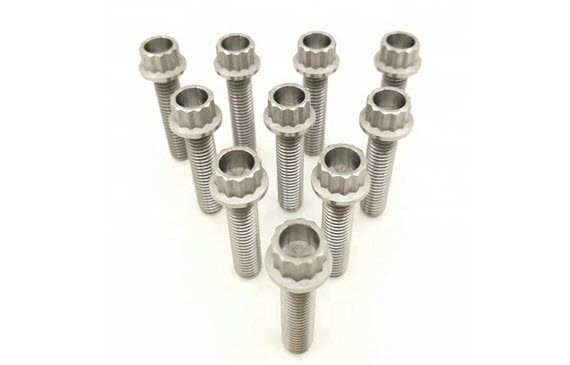
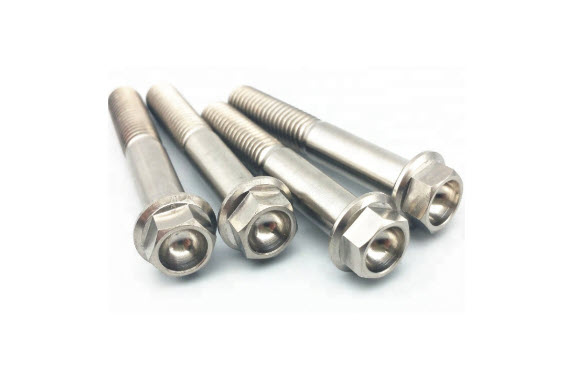
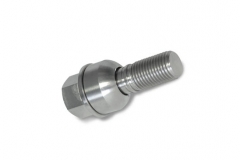
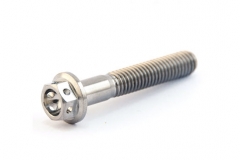
A titanium bolt is a high-strength, lightweight threaded fastener manufactured via cold heading or precision CNC machining for high-stress aerospace, marine, defense, and high-performance automotive assemblies.
We maintain proactive communication with our customers to assure that we fully understand our customers’ requirements and produce parts with the desired characteristics in the most cost effective manner.
If you are looking for Titanium Bolts, get in touch today and we will provide you with an accurate quote and our best services.
Watch the video of our titanium casting and titanium alloy facility to learn how titanium castings and titanium alloys & sheets are made. Video also available on
youtube.com
.
Structural & Mechanical Advantages of Titanium Bolts and Fasteners
Critical mechanical assemblies in aerospace airframes, turbomachinery casings, naval defense hulls, and motorsport suspension systems require threaded fasteners with high shear strength, light weight, and complete resistance to galvanic and environmental degradation. Titanium bolts deliver vital performance advantages over alloy steel (such as 4340 or 300M) and stainless steel fasteners:
High Strength-to-Weight Ratio (45% Weight Reduction):
Solution-treated and aged (STA) Ti-6Al-4V Grade 5 fasteners achieve ultimate tensile strengths from 160 to 175 ksi (1,103 to 1,207 MPa) and double shear strengths exceeding 95 ksi (655 MPa), while reducing fastener stack weight by 45% compared to Grade 8 steel or A286 high-strength stainless bolts.
Continuous Grain Flow via Warm Heading:
Unlike fasteners cut entirely from bar stock that expose end-grain vulnerabilities, ForceBeyond bolts are produced via precision warm heading at 1,400°F to 1,550°F (760°C to 843°C). This process ensures continuous, unbroken grain flow through the critical head-to-shank fillet radius, dramatically increasing fatigue endurance under cyclic tension.
UNJ Rolled Threads with Controlled Root Radius:
Threads are formed by precision thread rolling AFTER heat treatment in accordance with MIL-S-8879 and ASME B1.15. Thread rolling imparts deep compressive surface residual stresses and a smooth, continuous root radius that prevents stress concentration notches and quadruples fatigue cycle life compared to cut threads.
Titanium possesses an oxide film that, under sliding contact and high clamping torque, can gall or seize against steel, aluminum, or mating titanium tapped holes. To achieve predictable torque-tension clamp loads and prevent cold-welding seizure, ForceBeyond applies specialized anti-galling surface treatments:
AMS 2488 Type II Alkaline Anodizing: Transforms the titanium surface into a dense, wear-resistant dielectric conversion coating that prevents micro-welding during torquing.
MoS2 Solid Film Lubricant (AS5272 / MIL-PRF-46010): Baked-on molybdenum disulfide coating provides dry lubrication and a stable nut friction coefficient (k = 0.10 – 0.14).
Electrodeposited Silver Plating (AMS 2410): Applied over nickel strike for high-temperature gas turbine casing bolts up to 800°F (427°C).
Engineering Specifications & Material Standards
Titanium Fastener Alloys: Tensile, Shear & Temperature Limits
Fastener Alloy Grade & Condition
Tensile Strength (UTS)
Shear Strength (Double Shear)
Max Service Temperature
Governing Standard / Verification
Ti-6Al-4V Grade 5 STA (AMS 4928 / AMS 4967)
160 – 175 ksi (1103 – 1207 MPa)
95 – 105 ksi (655 – 724 MPa)
600°F (316°C)
AMS 4967, NAS 6204–6216, MS 9556–9570, ASTM E8
Ti-6Al-4V ELI Grade 23 (ASTM F136 / AMS 4930)
125 – 138 ksi (862 – 952 MPa)
80 – 90 ksi (552 – 621 MPa)
550°F (288°C)
ASTM F136, medical orthopedic screws & cryogenic flanges
Laser micrometer, runout under 0.0005 in to head datum
Head-to-Shank Fillet Radius
±0.005 in (±0.13 mm)
±0.002 in (±0.05 mm)
16 Ra (0.4 µm)
50× optical shadowgraph, NAS standard fillet
Tension Fatigue & Shear Verification
ASTM F606
NASM 1312-11 / NASM 1312-13
—
Pulsating tension fatigue (65,000 cycles minimum)
Non-Destructive Flaw Detection
ASTM E1417 (FPI)
ASTM E1444 / ASTM E1417 Level 4
—
100% fluorescent penetrant inspection for head cracks
Hydrogen Embrittlement Prevention & Lot Traceability
Titanium fasteners are sensitive to hydrogen absorption during chemical processing, which can induce delayed brittle failure under sustained tensile preload. ForceBeyond enforces strict vacuum degassing and chemical pickling controls per ASTM F519, holding total interstitial hydrogen below 100 ppm. Every production lot is delivered with complete chemical and mechanical Certified Material Test Reports (CMTR) and 100% heat lot traceability under AS9100D and ISO 9001:2015 quality management systems.
Why use titanium bolts instead of stainless steel or high-strength steel?
Titanium Grade 5 (Ti-6Al-4V) bolts offer equivalent tensile strength to Grade 8 steel (up to 150 ksi / 1034 MPa) with approximately 45% less weight and total immunity to saltwater and atmospheric galvanic corrosion.
Are ForceBeyond titanium bolt threads cut or rolled?
Critical aerospace and high-stress bolts feature rolled threads conforming to AS8879 Class 3A/3B specifications, which creates continuous grain flow and dramatically increases fatigue life over cut threads.
What titanium grades are available for fasteners?
We manufacture fasteners in Ti-6Al-4V (Grade 5 / AMS 4928), Ti-6Al-4V ELI (Grade 23 / ASTM F136) for medical and low-temperature service, and commercially pure Grade 2 for maximum chemical corrosion resistance.
Request a Quote for Titanium Bolts
Tell us about your titanium alloy, bolt or fastener geometry, machining requirements, inspection requirements, quantity, and delivery schedule.