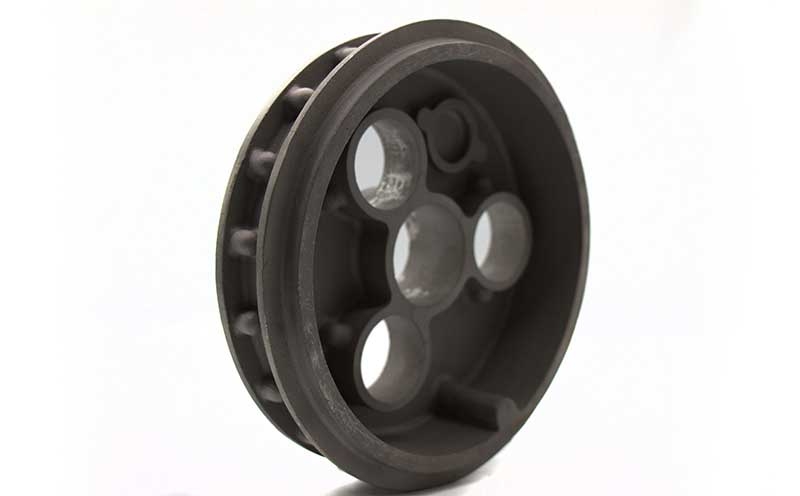
Rotor disks carry load through the bore, web and rim
Gas turbine disks carry blade centrifugal loads and transmit torque through the
rotor. Their bore, web and rim experience different combinations of stress,
temperature and cyclic strain. A manufacturing route must produce the specified
material structure before machining establishes the final interfaces. ForceBeyond
supports custom disk manufacturing and supply enquiries for qualified blanks,
finishing or coordinated part delivery. This hub explains the design-to-process
relationship and connects buyers to the approved alloy topics.
Discuss a custom rotor disk. Send the disk drawing, material and
blank-route specification, required inspection package and quantities. Request a custom quote.
Why bore and rim cannot be evaluated in isolation
The rim receives the blade load through slots or another attachment system. The web
carries that load inward, while the bore or shaft interface locates the disk and
transmits rotor forces. Fillets, bolt holes and attachment transitions may be local
stress concentrations. Thermal expansion across the disk changes during acceleration,
steady operation and shutdown.
Low-cycle fatigue, crack initiation, crack propagation and time at elevated load are
related but separate concerns. A drawing and life assessment translate them into material
condition, surface integrity and inspection requirements. Balance or overspeed
verification, when required, does not replace the acceptance of material and critical
dimensions.
Material route and inspection answer different questions
Disk manufacturing stages and evidence
Stage
What it establishes
Typical control to define
Blank production
Material identity and prescribed structure
Melt/lot pedigree, permitted working route and material tests.
Thermal processing
Required condition and structural response
Cycle records, sampling and acceptance specification.
Finish machining
Bore, face and attachment geometry
Datum transfer, runout, fillets and surface condition.
Release
Conformance of the specified deliverable
Required NDT, dimensional records and any rotor test obligations.
The table describes planning functions, not a universal inspection procedure. Methods and
limits are set by the disk specification.
Wrought nickel alloys, powder routes and titanium context
Special
Metals’ alloy 718 bulletin describes an age-hardenable nickel alloy with
condition-dependent properties. Powder-metallurgy disk alloys such as René 95 introduce a
different material-processing history. Neither a nominal alloy comparison nor a forging
capability establishes a qualified route for another disk.
ATI’s
Ti-6Al-4V data lists compressor disks among its applications. That is useful context
for titanium rotor enquiries, but it does not establish suitability in a hot turbine
stage. Actual component location and approved alloy must accompany the drawing.
The 718 disk route starts with an approved
wrought product form and controlled aging before final bore, rim and face acceptance. The
unchanged René 95 disk page addresses powder-derived
material and NASA fatigue/heat-treatment evidence. A blank-only order, rough-machined
blank and finished disk transfer different datum and inspection responsibilities.
Titanium examples on this site concern documented fan/compressor contexts until a
specific turbine-stage design basis is supplied.
A forging drawing and a finished disk
drawing serve different purposes. Stock allowance has to support machining of the bore,
faces and attachment region while preserving traceability. Fixtures and measurement
datums should link intermediate geometry to the finished rotor axis.
ForceBeyond can coordinate the requested blank or machined disk supply scope. Material approval, special
processes and capacity are confirmed against the customer program. A quality plan should
identify material tests, required NDT, critical measurements, documentation review and
release responsibilities.
Make the delivery condition clear in the quote
Identify a blank-only, rough-machined or finished-disk deliverable, then add the exact
material specification, product route, drawing revision and inspection clauses. Quantity,
tooling status and schedule help separate initial feasibility and first article from
repeat production. Rotor testing belongs explicitly in the scope when required.
Turbine Disks — Technical and Supply FAQs
How does a turbine disk carry blade load?
Blade attachments transfer centrifugal load into the rim, through the web and toward the bore or shaft interface. Local geometry and temperature gradients mean each region can have different material and surface requirements.
Why does a disk blank need a specified product route?
Working and thermal processing establish the structure on which material properties depend. Wrought, powder-derived and cast conditions cannot be assumed to have the same fatigue or crack-growth response.
Does a balanced disk also meet all material requirements?
No. Balance addresses mass distribution about the rotation axis. Material pedigree, prescribed structure, dimensions, surface condition and required NDT remain separate acceptance subjects.
What distinguishes a blank quote from a finished-disk quote?
A finished-disk scope includes the specified machining, final dimensions and release records. A blank quote stops at an intermediate condition and must define the material pedigree and stock remaining for downstream work.
Request Custom Turbine Disk Manufacturing
Send the disk drawing, material and blank-route specification, required inspection package and quantities.