Cast 738 blades connect alloy variant with airfoil integrity
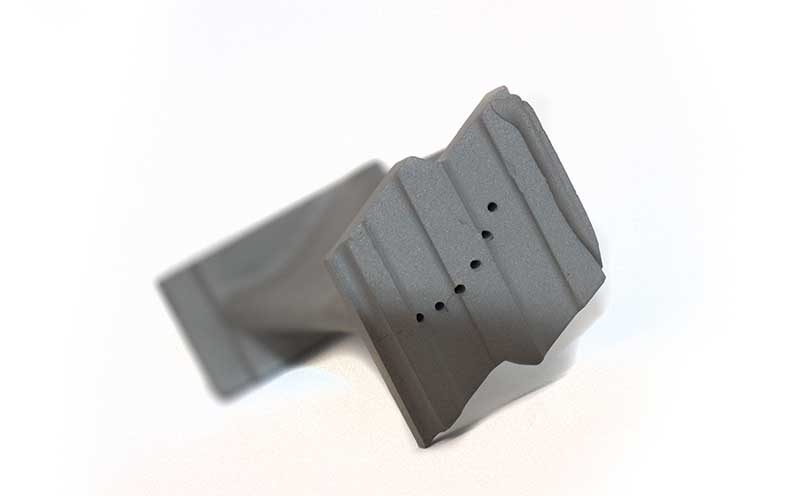
An Inconel 738 turbine blade combines a cast nickel-base alloy with a rotating
airfoil design. Variant, solidification structure and thermal condition matter
because the blade must retain its profile while resisting the specified creep,
fatigue and environmental exposure. ForceBeyond supports custom cast-blade
manufacturing and supply enquiries with cooling features, root finishing and
coating included in the defined scope. IN 738 LC data below illustrate one named
variant; they are not generic chemistry for every 738 specification.
Discuss a 738 casting or finished blade. Send the exact 738 variant,
crystal structure, airfoil and cooling model, coating scope and required delivery
condition. Request a custom
quote.
738 variant and microstructure belong together
SeAH’s IN 738 LC
information describes a lower-carbon variant of IN 738C for cast blades and vanes.
Alloy composition, heat treatment and permitted solidification route establish the
material condition. An LC designation must not disappear from the purchasing
specification merely because a drawing title says Inconel 738.
Use LC chemistry only for the LC reference
IN 738 LC selected nominal composition, wt%
Element
Nominal value
Chromium
16
Cobalt
8.4
Aluminium / titanium
3.6 / 3.4
Tungsten / tantalum
2.5 / 1.7
Values are from the
producer’s nominal LC table; they are not limits for 738C, blade test results or a
service-temperature rating.
Creep and cooling change the casting priorities
A rotating blade is loaded through the airfoil and root while temperature varies from the
attachment to the hot gas path. The design may use cooling to limit local metal
temperature. Core location, remaining walls and exit-hole condition consequently matter
alongside the outer profile; a sound outer surface alone does not verify an internal
passage.
The heavier root/platform region and thin airfoil also pose different solidification and
finishing constraints. A production plan must preserve the prescribed grain condition,
casting soundness and geometric relationships. Any required HIP, repair restriction or
coating belongs to that plan rather than being assumed from the alloy name.
At the root and platform, the thick section changes feeding and thermal history just
where centrifugal load enters the disk attachment. A thin, core-cooled airfoil creates a
different risk: core displacement can reduce a local wall while the outer contour still
appears correct. The inspection plan should pair defined wall or passage checks with
root-surface, attachment and airfoil-profile acceptance; a coating or repair operation
then needs its own final-state check.
This is a rotating-blade question, unlike the constrained platform and passage
positioning of an IN 738 stationary vane. Both
pages use producer LC
data as a variant-specific material example; neither transfers the producer's
blade/vane description into a qualified ForceBeyond casting source.
From near-net casting to accepted root and tip
Tooling and cores establish the near-net shape. Thermal processing, permitted stock
removal and root finishing bring the part to its final condition. Casting and machining need common datums for
airfoil location, platform and attachment.
Material tests, casting-soundness NDT, passage checks and dimensional reports examine
different attributes. For a directionally controlled structure, grain acceptance is an
additional subject. Coating can alter final dimensions and outlet access, so the
acceptance state must identify which measurements occur after finishing.
Why 738 and 718 are different procurement topics
Alloy
718 has a different chemistry and precipitation response from the cast-airfoil LC
reference shown here. Comparing grade names cannot resolve blade life or process
interchangeability. The 738 discussion centers on casting variant, structure and cooling
geometry; the 718 blade page addresses its own
product-form and final-condition questions.
Build a custom blade supply package
ForceBeyond can coordinate a defined casting-only or finished-blade proposal. Specific
738 variant capability, processor approvals and production capacity must be confirmed.
The RFQ should establish alloy revision, structure, cooling and root geometry, thermal
and coating scope, inspection records, quantities and delivery. First article and
recurring parts can then be scoped as distinct milestones.
Inconel 738 Turbine Blade — Technical and Supply FAQs
Why distinguish IN 738 LC from IN 738C for a blade?
They are different variant definitions. The exact chemistry and material specification govern the casting and acceptance route; the LC example data are not a generic purchase range for all 738 alloys.
What does a cooling core change in 738 blade inspection?
Its position defines passage geometry and remaining walls. Internal-feature acceptance therefore requires the specified checks in addition to the external profile and root dimensions.
Is HIP always part of a 738 blade route?
No. HIP is included when the approved drawing, material specification or process plan requires it. Its records and subsequent inspection must follow that program.
Can a 738 blade quote include machining and coating?
A finished-blade package can be reviewed with those operations explicitly included. The quotation should identify final inspection state, required processors and supplied release records.
Request an Inconel 738 Blade Casting Quote
Send the exact 738 variant, crystal structure, airfoil and cooling model, coating scope and required delivery condition.