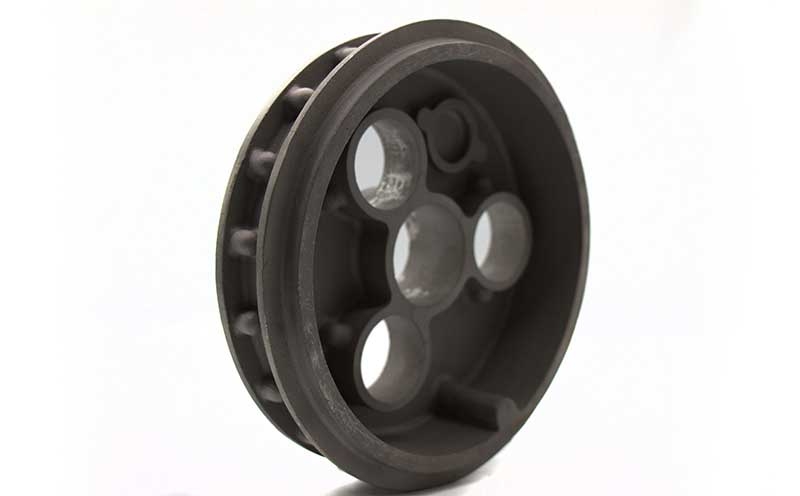
Connect 718 disk material condition to finished rotor geometry
An Inconel 718 turbine disk carries rotor load through its rim, web and bore. The
age-hardenable nickel alloy provides a material system whose properties depend on
the specified product form and thermal condition. Critical dimensions and
surfaces must then be created without losing the material pedigree behind the
blank. ForceBeyond supports custom 718 disk manufacturing and supply, from a
defined blank or customer-supplied forging to a coordinated finished-part
proposal.
Define your 718 disk deliverable. Send the disk drawing, material and
forging specification, final condition and release requirements, with quantity and
schedule. Request a custom
quote.
Age hardening and product form shape the disk specification
Special
Metals’ bulletin describes solution treatment and precipitation hardening of 718. A
disk drawing must reference the correct product specification and final condition; a
nominal alloy certificate alone does not establish the forging structure or the required
mechanical response. Properties taken from a sheet or another thermal condition cannot
automatically serve as disk allowables.
Separate alloy identity from finished-disk acceptance
718 disk material and manufacturing definitions
Definition
Technical purpose
Evidence to retain
UNS N07718 alloy identity
Names the alloy system
Chemistry and material certification.
Wrought blank specification
Defines required product form and condition
Forging/melt traceability and specified tests.
Final thermal condition
Controls the age-hardening response
Approved cycle and acceptance records.
Finished disk drawing
Sets geometry and critical surfaces
Bore/rim reports and required NDT.
The alloy designation and precipitation description are supported by the
producer reference. The customer’s actual forging standard and revision control the
purchase.
The bore-to-rim load path guides datum transfer
The blade attachments introduce load into the rim; the web carries it toward the bore or
shaft interface. Fillets and attachment transitions can be fatigue-sensitive, while faces
and pilots establish axial and radial location. Their finished relationship is the reason
datum transfer matters between the blank, rough machining and final machining.
Surface condition around slots, holes and bore transitions should be specified where the
design depends on it. Material integrity, geometric runout and mass balance are different
acceptance subjects. None can replace the others by inference.
Forging, thermal processing and machining must be sequenced
The 718 forging resource explains a related wrought
route. For a particular disk, the qualified blank must retain the required stock and
identification through rough machining and thermal processing. Final cutting and
inspection establish the attachment, bore and face dimensions in the stated condition.
The inspection plan may include specified
material tests, internal or surface NDT and dimensional reporting. Method, coverage and
acceptance must follow the part specification. A machining quote should state who
supplies the qualified blank and which upstream records accompany it.
For a disk specified as wrought 718, confirm the approved melt and forging product form
before sizing the blank. Preserve forging and heat identity through rough bore, web and
rim machining; apply the prescribed solution and aging route, then finish the bore,
faces, attachment and fillets against the final datum scheme. The producer's
condition-dependent properties explain why a generic 718 certificate is insufficient,
but the actual disk acceptance comes from its governing product and rotor specifications.
Check critical surfaces and required internal soundness in the specified sequence, then
measure final bore-to-rim relationships and runout after any process that can change
geometry. The René 95 comparison is a powder-route
and fatigue-evidence topic; it does not transfer its PM acceptance criteria to a wrought
718 forging.
718 versus René 95 requires route-specific evidence
The René 95 benchmark discusses powder-processing
and fatigue research. It is a different material/route evaluation, not a substitution
recommendation for this 718 disk. Temperature, loading cycle, dwell and crack-growth
requirements must be assessed using data for the actual product condition.
Coordinate a disk blank or finished rotor component
ForceBeyond can coordinate the defined material, forging and machining supply scope.
Program-specific processor approvals and capacity require confirmation before production
commitment. A release package should connect drawing revision, material identity, thermal
history, critical dimensions and required NDT.
For a custom quote, define blank-only, rough-machined or finished-disk delivery. Add the
governing specifications, quantities, tooling status and schedule. Balance or overspeed
verification should be a separately defined obligation where the rotor design requires
it.
Inconel 718 Turbine Disk — Technical and Supply FAQs
Why does a 718 disk need a forging specification as well as an alloy name?
The alloy name identifies chemistry, while the product specification and thermal condition establish the required material form and acceptance. A disk also needs the structure and tests prescribed by its design.
What does datum transfer mean during disk manufacture?
It is the controlled relationship between intermediate locating features and the final bore, faces and attachment geometry. It helps machining and measurement refer to the same rotor axis.
Can balance verification replace disk runout measurement?
No. Balance concerns mass distribution; runout concerns geometric relationship to the datum axis. The disk program can require both alongside material and surface acceptance.
Can ForceBeyond quote finishing of an existing 718 forging?
A finishing scope can be reviewed when its material pedigree, incoming condition and machining allowance are established. The quote should identify the remaining operations, inspection and release records.
Request a Custom Inconel 718 Disk Quote
Send the disk drawing, material and forging specification, final condition and release requirements, with quantity and schedule.