Does IN 713C data automatically apply to a 713LC wheel?
No. They are different grade definitions with separate specifications. The full designation must remain in the material and manufacturing records.

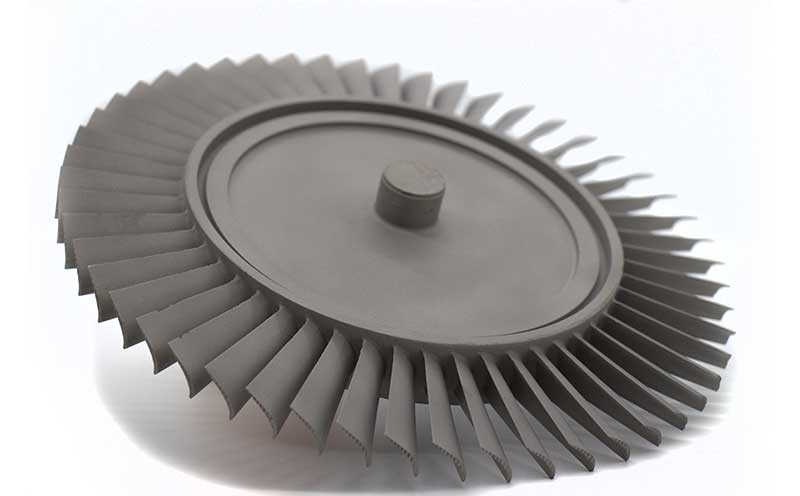
An Inconel 713C turbine wheel enquiry combines a cast nickel-base alloy with integral rotor geometry. The producer documents 713C as a precipitation-hardened cast airfoil alloy; a particular wheel still needs its own approved structure, thermal condition and life evidence. Thin airfoils connected to a heavier hub make casting quality and final finishing closely related. ForceBeyond supports a custom 713C wheel casting and supply scope with material identity, geometry and inspection defined for the requested rotor.
Discuss your 713C cast wheel. Send the wheel model, 713C specification, casting/thermal route, shaft interface and required inspection or rotor checks. Request a custom quote.
SeAH’s 713C reference describes a conventionally cast precipitation-hardened alloy. The C designation matters: a different low-carbon variant has its own specification and cannot be assumed equivalent. Nominal chemistry helps identify the grade but does not establish wheel properties or source approval.
| Constituent | Nominal value |
|---|---|
| Nickel | Balance |
| Chromium / aluminium | 12.5 / 6 |
| Molybdenum / niobium | 4.2 / 2 |
| Titanium | 0.8 |
Producer figures are nominal, not purchase ranges, strength values or a qualified wheel-temperature limit.
The hub and thin airfoils solidify and cool in a complex connected geometry. Fill, soundness and stock distribution need a process plan that considers those local sections. A dimensional airfoil check cannot alone establish the internal condition of a heavy hub or its transitions.
Centrifugal and gas loads transfer through the airfoil roots into the hub. Local fillets and finished surfaces can be important to cyclic assessment. The rotor design therefore controls which casting defects, repair routes, surface conditions and thermal treatments are acceptable.
A thin passage may freeze before the heavy hub finishes feeding, so fill and solidification planning must consider connected section thickness, likely shrinkage locations and permitted stock at the bore. If the design contains cores, their position also affects passage clearance and remaining metal; an uncooled solid-wheel design has a different access question. Radiography or another specified internal method must be assessed for its actual coverage in the thick hub and transition, not assumed to see every defect at every orientation.
The producer's 713C listing describes conventionally cast solid airfoils. It does not certify this integral wheel geometry or a particular foundry. HIP, if required, follows the approved route and cannot make an unaccepted open surface defect or unverified geometry acceptable.
Near-net casting leaves defined stock for bore, pilot, faces or shaft connection. Final machining must locate the integral airfoils relative to the rotation axis without losing material identity or required surfaces.
The release package can include prescribed chemistry/material tests, casting-soundness NDT, surface checks and profile/interface dimensions. HIP, repair and subsequent inspections must follow the approved route when required; they are not automatic corrections for any casting defect. Balance and rotor tests remain separately defined obligations.
MAR M 247 producer data show another cast nickel alloy with different refractory additions and nominal chemistry. A generic high-temperature comparison cannot establish equivalent wheel life. The 247 wheel page addresses that material system without recommending substitution for an approved 713C rotor.
ForceBeyond can scope a custom casting, machined wheel or specified wheel-shaft package subject to program-specific capacity and processor approval confirmation. Include exact material and casting specifications, final condition, drawings, critical surfaces, inspection criteria, tooling status and quantities. Identify downstream joining and rotor verification so the quote covers the actual delivery boundary.
No. They are different grade definitions with separate specifications. The full designation must remain in the material and manufacturing records.
The heavy hub and thin airfoils create different solidification conditions. Surface and dimensional checks alone may not establish the internal soundness required by the rotor design.
No. Where required, HIP is one controlled step. Material tests, required NDT, surface condition and dimensions still need their own acceptance evidence.
The quote should identify a near-net casting, finished loose wheel or complete assembly, including who performs thermal processing, machining, joining and any specified rotor tests.
Send the wheel model, 713C specification, casting/thermal route, shaft interface and required inspection or rotor checks.
Expand this section to review the external standards, technical organizations, and reference materials used for this page.
Explore related ForceBeyond material, process, quality, industry, and manufacturing resources.