Is Inconel enough to define a turbine vane material?
No. The exact grade, variant, product form and thermal condition determine which chemistry and property data apply.


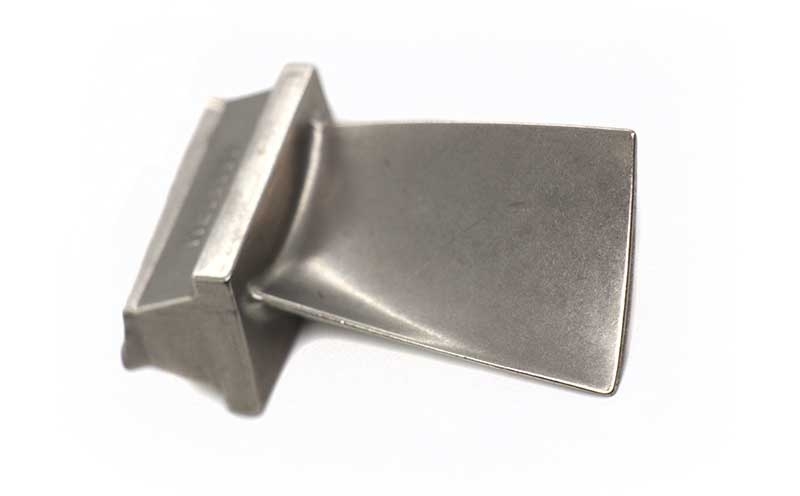
An Inconel turbine vane is a stationary airfoil made to a specified nickel-alloy grade and component design. The family name alone does not define creep response, corrosion resistance or a casting route. The vane’s airfoil, platforms, cooling and mounting interfaces must share a clear final-condition definition. ForceBeyond supports custom vane manufacturing and supply enquiries, helping scope an individual casting, finished vane or assembly without treating different Inconel grades as interchangeable.
Identify the Inconel vane material and scope. Send the full grade and product specification, vane and assembly geometry, cooling/coating requirements and quantity. Request a custom quote.
718 producer data concern an age-hardenable alloy with its own product forms and thermal conditions. IN 738 LC data describe a cast blade/vane alloy and its LC variant. The two references illustrate why a general Inconel label cannot be turned into one chemistry or service limit.
| Topic | 718 reference | 738 LC reference |
|---|---|---|
| Material question | Required product form and age-hardening condition | Exact cast-alloy variant and specified structure. |
| Geometry question | Machined or specified formed/cast configuration | Core/airfoil/platform relationship for the casting. |
| Evidence question | Applicable material and final-condition records | Casting, thermal and any structural acceptance records. |
| Selection authority | Approved component design | Approved component design. |
The comparison identifies enquiry questions. It does not recommend either alloy for an unspecified vane.
Use this page to resolve an incomplete material description. A drawing that says only “Inconel vane” needs the exact grade, cast or wrought product specification, final condition and intended stage before a process route is selected. A 718 wrought-product example cannot supply casting acceptance for a 738 LC vane; conversely, LC cast-airfoil data cannot establish an approved 718 replacement. Cooling and support geometry are separate design approvals from nominal chemistry.
NASA’s turbine model shows a stationary row turning flow toward a rotor. Vane angle and spacing affect the passage, while platforms and supports carry gas loading and constrain thermal expansion. The mounting state therefore matters when establishing airfoil and platform dimensions.
For cooled designs, wall and passage geometry must be verified independently from the external profile. Coating can affect outlets and final fit. A complete part definition includes the actual stage and assembly rather than just a nominal airfoil shape.
A cast vane needs tooling, any cores and the prescribed solidification/thermal route. A permitted wrought or fabricated construction has different forming, machining or joining responsibilities. Dimensional similarity is not evidence that the routes produce the same material state.
Finished interfaces are established through machining and specified surface operations. The quality plan links material heat, process history, required NDT and profile/interface results. Repair and joining permissions come from the program, not a generic statement of alloy weldability.
The 738 vane page develops the variant-specific casting and cooling discussion. This family page instead helps resolve ambiguous grade names and select the correct product-form data. The stator hub distinguishes Stage 1 and inter-stage configurations.
ForceBeyond can coordinate a defined casting, finishing or assembly proposal. The selected grade capability, capacity and processor approvals require confirmation. An RFQ should establish alloy and revision, individual/assembly drawings, cooling and coating scope, inspection criteria, delivery state, quantity and schedule.
No. The exact grade, variant, product form and thermal condition determine which chemistry and property data apply.
The airfoil and platforms are located by the supports, and thermal expansion is constrained by the assembly design. Final measurements need the specified datum and assembly state.
The approved design controls whether it is cast, wrought, fabricated or another specified construction. Similar external geometry does not establish equivalent material behavior.
The general enquiry must first resolve the grade and product form. A 738 LC package can then define its specific casting structure, thermal processing, cooling and final acceptance.
Send the full grade and product specification, vane and assembly geometry, cooling/coating requirements and quantity.
Expand this section to review the external standards, technical organizations, and reference materials used for this page.
Explore related ForceBeyond material, process, quality, industry, and manufacturing resources.