Can Mar-M 247 and a low-carbon derivative be treated as one wheel grade?
No. The exact designation, material specification and process route must be retained. Related alloy names do not establish interchangeable chemistry or qualification.

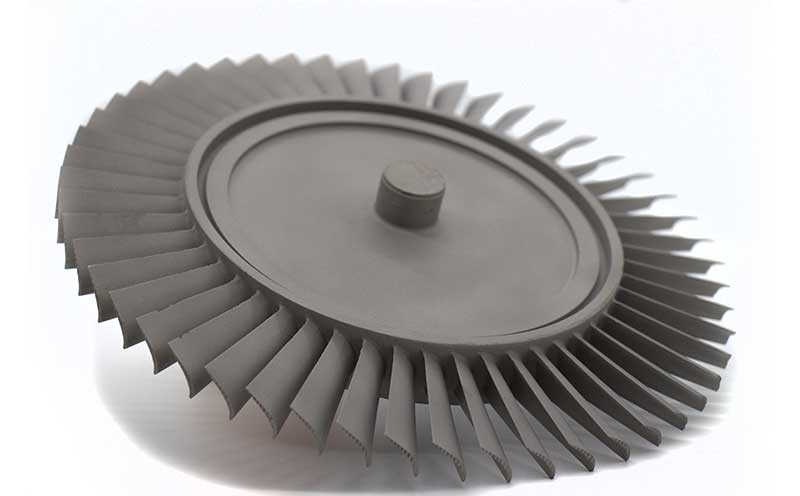
A Mar-M 247 turbine wheel uses a nickel-base cast alloy in an integral rotating geometry. The producer describes a high gamma-prime alloy with refractory additions, but a generic blade or vane application is not a qualification for a wheel. Hub, airfoils, local transitions and shaft interface require a process and acceptance plan for the actual rotor. ForceBeyond supports custom 247 wheel manufacturing and supply enquiries with alloy variant, structure and final delivery condition established together.
Define the Mar-M 247 wheel route. Send the exact grade or derivative, wheel drawing, prescribed structure and thermal route, inspection and rotor-verification scope. Request a custom quote.
SeAH’s MAR M 247 data identify a gamma-prime nickel alloy with substantial refractory additions. Producer tables also distinguish related low-carbon or controlled-solidification products. A derivative name must not be silently replaced by the base-grade description; the specified chemistry and process remain part of the rotor’s material basis.
| Constituent | Nominal value |
|---|---|
| Chromium / cobalt | 8 / 10 |
| Tungsten / tantalum | 10 / 3 |
| Aluminium / hafnium | 5.5 / 1.5 |
| Nickel | Balance |
These producer nominal values are not mechanical allowables, universal variant limits or a wheel life/temperature rating.
The integral rotor transfers airfoil loads into the hub while local temperatures vary through the part. Thin passages and a heavier center require attention to filling, solidification and the prescribed grain condition. A process qualified for an isolated vane does not by itself establish the same result in a wheel.
Gamma-prime condition and casting quality matter alongside final geometry. The design controls acceptable defects, thermal processing and required material tests. Changes to alloy variant, grain structure or manufacturing route alter the qualification question even when the external wheel model is unchanged.
SeAH describes MAR M 247 as a high-gamma-prime cast alloy with substantial tungsten and tantalum additions; those constituents distinguish its material system from 713C, but producer blade/vane data do not qualify an integral wheel. The heavy hub and thin airfoils need a permitted solidification structure, sound transition and material tests representative of the approved wheel route. A controlled-grain derivative or LC variant requires its own designation and process evidence.
Thermal processing and any HIP cycle must preserve the specified structure across unlike section sizes. The acceptance plan should state sample location, allowed defects and final machining state, then separately define balance or overspeed duties. 713C casting-integrity questions help frame the comparison, but the two grades cannot be ranked by a nominal chemistry table alone.
A casting plan should define stock, material identity and the required thermal/HIP sequence where applicable. Subsequent machining establishes the rotor axis, shaft connection and final airfoil/fillet surfaces. Narrow passages may constrain tool and inspection access.
Required NDT addresses specified surface or internal discontinuities; dimensional records establish profile and interfaces. Neither set of records replaces final-state balance or rotor tests when those are required. Permitted repair, material sampling and release responsibilities must be clear before recurring production.
IN 713C nominal data differ from the 247 reference shown here. That chemistry distinction is useful for identity, but it is not a performance ranking. The 713C wheel page explains its own casting questions. Selection needs the rotor’s loading cycle, local temperature, oxidation/coating system and qualified properties for the intended route.
ForceBeyond can coordinate a defined blank, machined wheel or assembly proposal subject to grade-specific source capability and approval confirmation. The RFQ should identify base grade or derivative, structure, thermal route, drawing revision, required tests and NDT, shaft interface, quantities and schedule. Balance, joining and overspeed work must be explicit quoted deliverables.
No. The exact designation, material specification and process route must be retained. Related alloy names do not establish interchangeable chemistry or qualification.
No. The wheel’s hub and integral airfoils create their own casting, stress and inspection requirements. Product-specific approved data are needed.
NDT addresses the specified material discontinuities; balance addresses mass distribution. Dimensions, surfaces and any rotor test obligations remain separate acceptance subjects.
It should define the alloy/structure, casting and thermal route, machining, critical inspection, shaft or joining scope where applicable, quantities and final delivery state.
Send the exact grade or derivative, wheel drawing, prescribed structure and thermal route, inspection and rotor-verification scope.
Expand this section to review the external standards, technical organizations, and reference materials used for this page.
Explore related ForceBeyond material, process, quality, industry, and manufacturing resources.